
Players: 2 Players (Couch Co-op)
Genre: Puzzle Platformer / Horror / Atmospheric Adventure
Estimated Playtime: 4–6 Hours
Reanimal is a rare kind of game. It combines atmospheric storytelling, unsettling horror elements, and couch co-op gameplay in a way that you just don’t see very often.
For fans of artistic games that focus on mood and interpretation rather than traditional storytelling, ReAnimal fits squarely into what I personally consider an art game.
What Makes an Art Game?
I’ve always been a fan of art games, and I’ve always loved the conversation around them—what exactly defines an art game.
To me, the definition is pretty simple. An art game is usually something that tells a story in a unique or unconventional way. Often there’s little to no dialogue, and the story is communicated through atmosphere, visuals, and interpretation.
Another common trait is that the story is usually mysterious and open to interpretation, leaving players with unanswered questions.
Some of my favorite examples of this style include:
Shadow of the Colossus
Journey
GRIS
Limbo
Inside
And another obvious comparison would be Little Nightmares.
To me, ReAnimal checks all of those boxes.
A Story Told Through Atmosphere
ReAnimal contains very little spoken dialogue. What dialogue does exist is mostly between the two children you control, and early on it becomes clear that they’re trying to escape something dark.
But you never fully understand what’s going on.
Even by the end of the game, the story remains somewhat ambiguous. You’re left with questions, and the game doesn’t spell everything out for you.
Personally, I love that approach. I enjoy games that leave room for interpretation and encourage players to come up with their own theories about what’s happening.
ReAnimal does a great job building that mystery throughout the entire experience.
A Constantly Creepy Atmosphere
The horror elements in ReAnimal aren’t just about enemies—it’s about the entire atmosphere of the game.
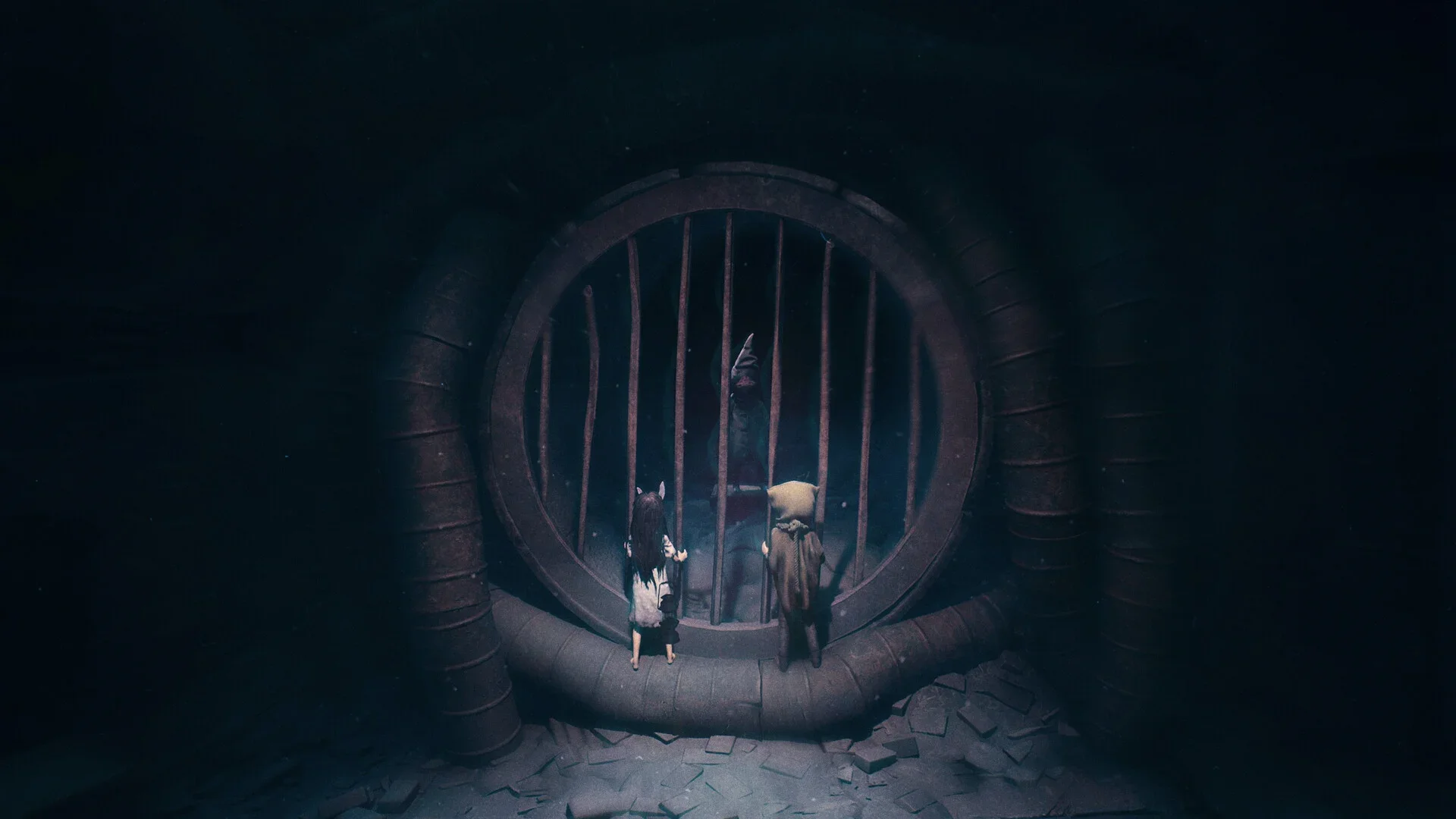
The environments themselves feel unsettling. Most areas are dark, dimly lit, and filled with disturbing imagery. The sound design also plays a huge role in creating that uneasy feeling as you move through the world.
Everything about the presentation contributes to the game’s creepy tone.
And then there are the enemies.
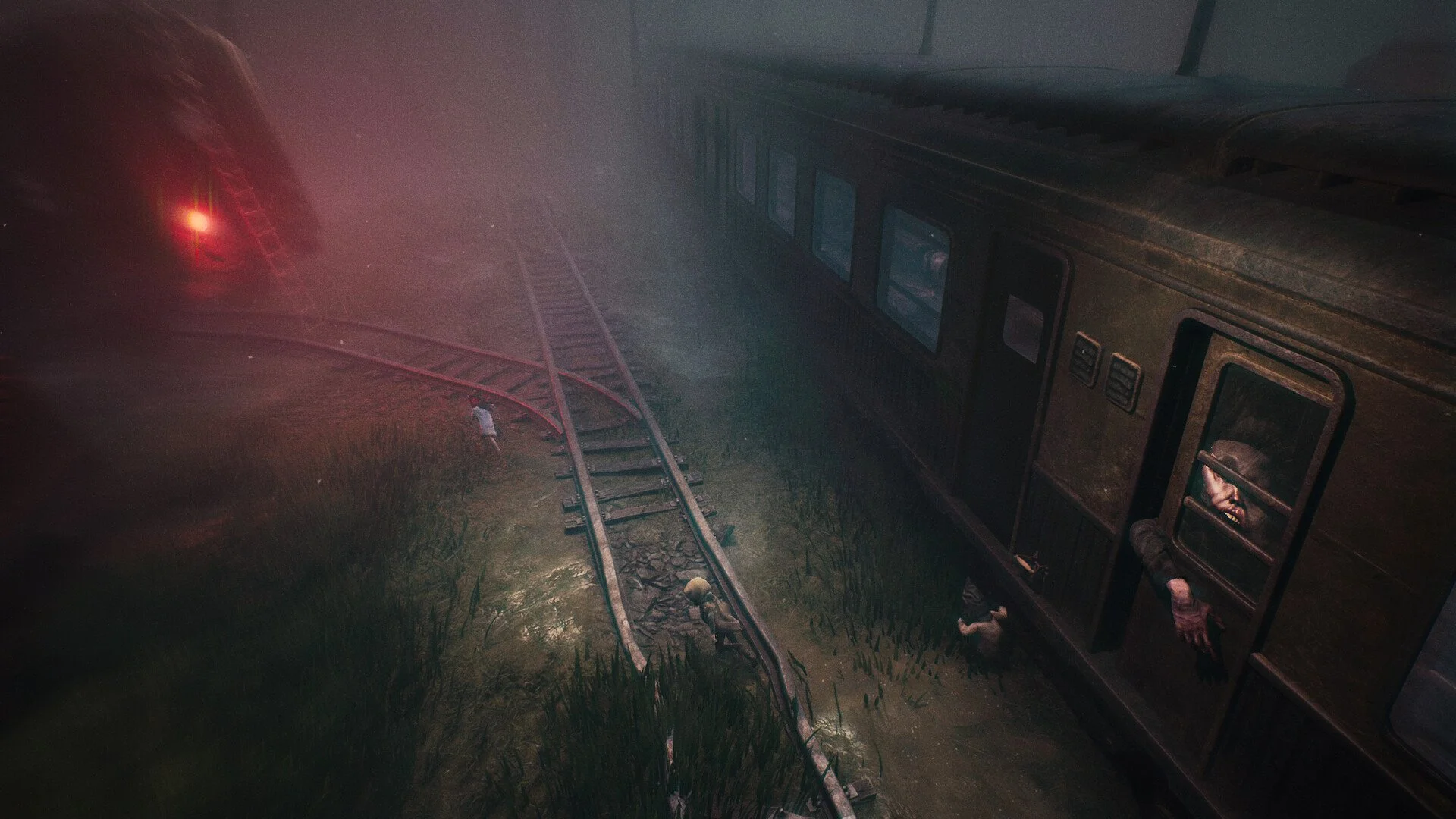
One of the most memorable enemies are the skin suit creatures that crawl around the environment. Early in the game you encounter a disturbing figure wearing an ill-fitting skin suit who stalks you and tries to bite your head off. What makes it even creepier is that he can seemingly transport himself through other skin suit bodies, appearing in different places as he chases you.
Later in the game you encounter even larger monsters, including:
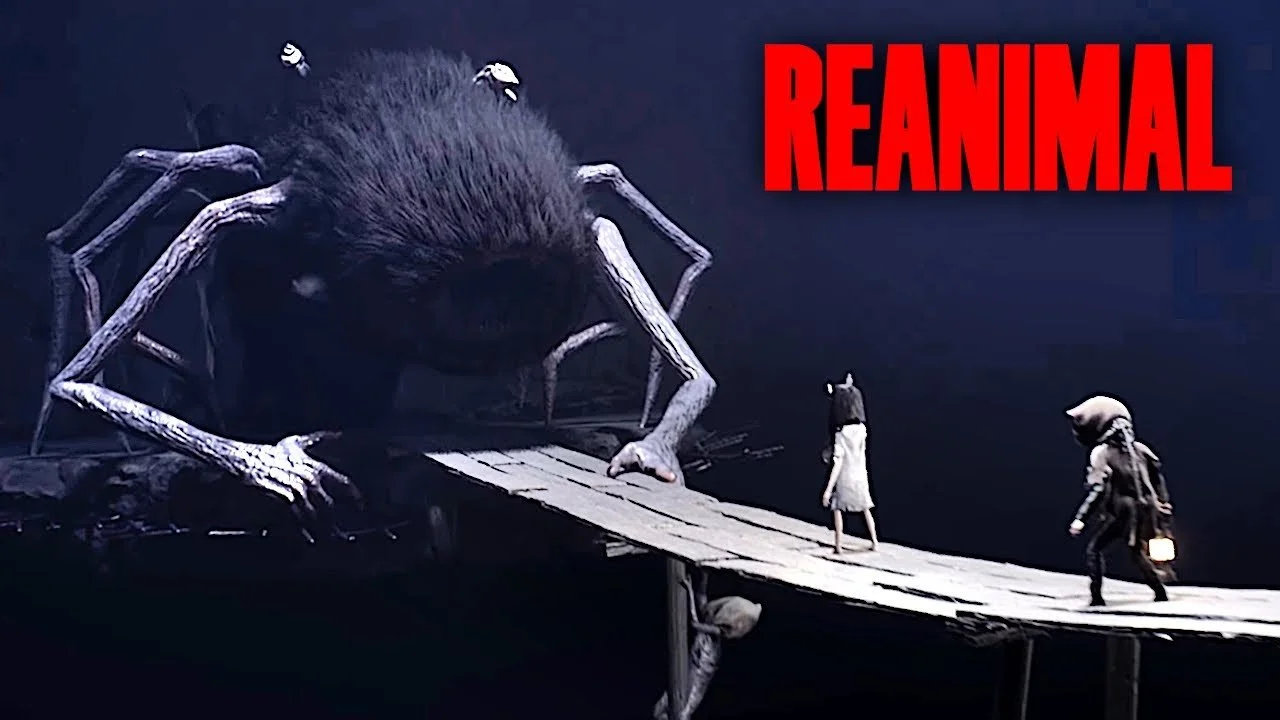
A giant spider creature
A massive bird monster
A horse-like creature in the water
And at the end of the game there’s the unsettling sheep creature, which serves as one of the game’s most memorable encounters.
I won’t get too deep into the story behind these moments since the narrative is intentionally vague, but each encounter adds to the game’s disturbing atmosphere.
A Rare Couch Co-op Horror Experience
One of the things that stood out to me the most is just how rare a game like this is.
There really aren’t many couch co-op horror games, and there are even fewer couch co-op art games.
ReAnimal manages to combine both of those things.
For me, that made it a really satisfying experience. It scratched two very specific gaming itches at the same time.
co-op Gameplay That Feels Purpose-Built
When it comes to the co-op gameplay itself, ReAnimal doesn’t necessarily introduce brand-new mechanics. But the game still feels like it was clearly designed around two players.
Just navigating the environment requires cooperation in many situations.
Examples include:
Giving your partner a boost up to a ledge so they can pull you up
Activating levers and switches that require both players
Opening doors or progressing through areas where both players must be present
Because of this, you actually have to work together to move forward.
The game does allow for a single-player option with an AI companion, but honestly it feels like the experience was intended for two players.
Moments That Require Communication
As the game progresses, the co-op gameplay becomes a bit more involved.
One memorable section has both characters tied together, which reminded me of mechanics used in games like:
Red Rope: Don’t Fall Behind
Phogs!
There’s even a similar concept used in Split Fiction.
This section requires players to coordinate their movements and communicate more closely. It’s a relatively short segment, but it adds a nice variation to the gameplay.
Cooperative Combat Moments
There are also situations where teamwork isn’t strictly required, but it definitely helps.
For example:
During the spider encounter, the spider throws spears that players must grab and throw back at it. Having both players working together makes this encounter much easier.
Another memorable sequence happens while you’re driving a truck and the skin suit monster climbs through the window. One player uses a knife, while the other uses a crowbar to hit the monster’s hands and force him back out.
These moments encourage communication and coordination even though technically one player could handle parts of them.
Difficulty and Accessibility
ReAnimal is also a very accessible game.
The difficulty is relatively low, and most players should be able to pick it up and start playing without much trouble.
The puzzles aren’t especially difficult, and the combat encounters never become overwhelming. This is very much a game that prioritizes atmosphere and experience over challenge.
The game also isn’t very long. I actually played through it twice, and each playthrough took around four to six hours.
Because of its short runtime and accessible mechanics, it feels like a great game to sit down and play through with a friend over the course of a couple sessions.
Minor Frustrations
I honestly don’t have much negative to say about ReAnimal, but there were a couple small issues.
Sometimes interacting with objects felt a little clunky. When you need to push something or activate a mechanism, you have to stand in just the right position before the action prompt appears. Occasionally it didn’t feel as responsive as I would have liked.
There were also a few moments where puzzles weren’t immediately clear—not because they were difficult, but because it wasn’t obvious whether you were supposed to interact with something right away or come back later.
There was one moment where we got stuck for a while during the horse monster cannon section.
We kept trying to fire the cannon, but nothing was happening. Eventually we realized we had actually reached that area too early. After progressing through another section—saving helpers and defeating the spider—you return later, solve a small puzzle, and new ammunition drops down so you can finally fire the rockets.
Once we realized that, everything made sense.
Final Thoughts
Other than a few moments where things weren’t immediately obvious, ReAnimal was a really solid experience.
There simply aren’t many games like this. It combines art game storytelling, horror atmosphere, and couch co-op gameplay in a way that feels fresh and unique.
For me, it scratched all the right gaming itches:
art games
horror games
cooperative games
At this point, it’s actually shaping up to be my favorite couch co-op experience of the year so far. I would absolutely love to see more developers attempt something like this—especially games that blend horror with more artistic and atmospheric storytelling. ReAnimal proves that there’s a lot of potential in that space.