
in gaming, asymmetrical co-op means players don’t share the same role, abilities, or even perspective. They’re not just two versions of the same character. They have different jobs that complement each other.
And when it’s done right, it can completely elevate a cooperative game.
So today, we’re doing a deep dive into asymmetrical co-op gaming—what it is, where it started, and why it works.
The Origins (1978–Late ‘80s)
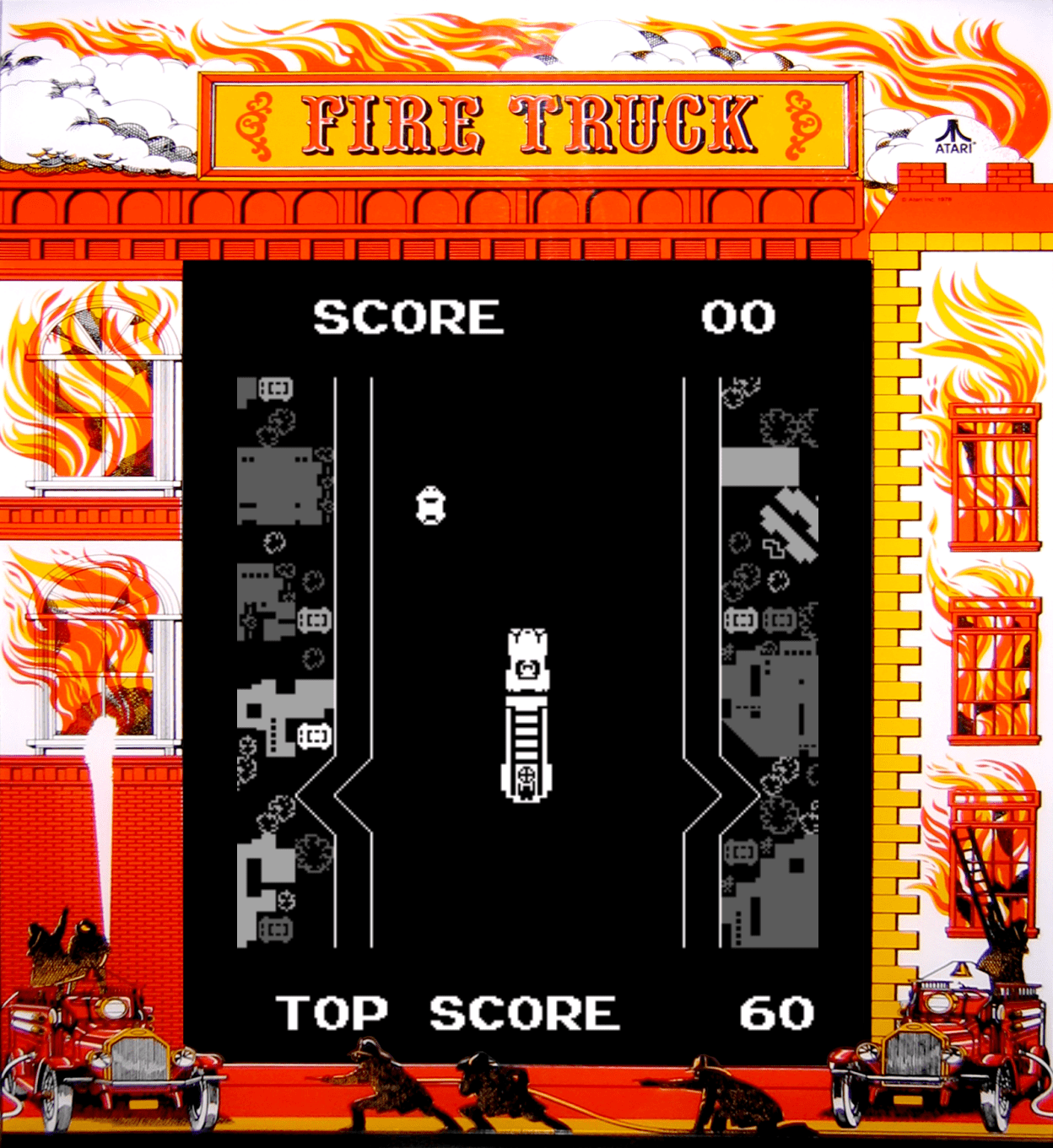
It all started in 1978 with Fire Truck.
This is often cited as the first co-op game ever made, and I haven’t found anything that predates it. Two players control a single fire engine—one steers the front, the other controls the trailer behind. You literally cannot play the game without communicating. It’s pure teamwork built directly into the hardware.
Nintendo experimented with this idea in the mid-80s with Gyromite on the NES. One player controls the main character, while the other uses a second controller (or R.O.B.) to raise and lower gates. It feels more like operating machinery together than playing a traditional platformer.
Then there’s Gotcha! The Sport, where one player moves the camera while the other uses a light gun to shoot. It was probably meant to be single-player, but splitting the roles between two people just feels natural.
In 1988, Silkworm took things further. One player pilots a helicopter while the other drives a jeep. One handles threats in the air, the other covers the ground. You rely on each other constantly.
That idea was later refined in Firepower 2000 on the Super Nintendo—same concept, but more polished.
Early Experiments (Late ‘80s–Early ‘90s)
Games started exploring assist-style asymmetry too.
In Eight Eyes, one player controls the main character while the second controls a falcon companion. The falcon can attack, grab items, and activate switches. It’s not equal, but both players clearly have defined roles.
Then you get something like Bimini Run on the Genesis—one player drives a speedboat while the other handles the weapons. It’s a simple idea, but it works.
One of the most important examples from this era is The Lost Vikings. Each character has completely different abilities—combat, defense, speed—and you have to combine them to solve puzzles. On Genesis, you could even play with three players.
In 1993, Yoshi’s Safari split things cleanly—one player drives, the other shoots with the Super Scope. Completely different jobs, same goal.
And arcades pushed it even further with Lucky & Wild, where one player drives and shoots while the other focuses purely on gunplay. This was basically the peak of the driver/gunner concept.
Mid ‘90s to Early 2000s — Expanding the Idea
The Firemen 2: Pete & Danny took a different approach. One player uses a fire hose for ranged attacks, while the other uses an axe and close-range tools. Two completely different playstyles solving the same problem.
Then there’s Seven Mansions: Ghastly Smile on Dreamcast. This is one of the first co-op survival horror games, and it uses asymmetry in a really interesting way. Each character has strengths and weaknesses, and you’re often separated, solving different parts of the same puzzle.
By the early 2000s, asymmetry started sneaking into more mainstream games.
Mario Kart: Double Dash!! let two players share one kart—one drives, the other handles items.
Final Fantasy Crystal Chronicles had one player carry the chalice while everyone else protected them. Not fully asymmetrical, but that one role changes everything.
Starsky & Hutch brought back the driver/gunner setup with modern hardware—one player drives, the other shoots with a light gun. If you had both peripherals, it was a really unique experience.
But after this, that specific style kind of faded out.
Late 2000s — The Transition Era
Local co-op started to decline, but some games kept the idea alive.
Kane & Lynch: Dead Men split perspectives—one player might cover from above while the other moves through the level below.
Army of Two built its entire design around cooperation. One player draws aggro while the other flanks. You’re constantly working together, even if the game isn’t fully asymmetrical all the time.
Resident Evil 5 gave each player different strengths. One handles heavy combat, the other manages support, healing, and precision.
These games weren’t fully asymmetrical, but they proved something important—co-op doesn’t have to mean doing the same thing.
The Indie Renaissance (2010s)
This is where asymmetrical co-op really took off.
F.E.A.R. 3 gave players completely different playstyles—one uses weapons, the other has supernatural powers.
Then in 2015, Affordable Space Adventures basically brought the Fire Truck idea back. Players control different systems of the same ship—movement, power, temperature. You’re literally operating one machine together.
Resident Evil Revelations 2 split roles between combat and support—one fights, the other scans for items and enemies.
Lovers in a Dangerous Spacetime is one of the best examples of controlled chaos. Players run between stations—piloting, shooting, shielding—trying to keep everything working.
Keep Talking and Nobody Explodes takes it even further. One player sees the bomb, the other reads the manual. No shared screen. Pure communication.
Other great examples:
Carly and the Reaperman – one player in VR, one on screen
Arise: A Simple Story – one controls the character, the other controls time
Degrees of Separation – fire and ice mechanics affecting the world
Toodee and Topdee – two completely different perspectives (2D and top-down)
At this point, asymmetry isn’t just a mechanic—it’s the entire game.
Hazelight and Modern Asymmetrical Co-op
Then you have Hazelight Studios.
Games like A Way Out, It Takes Two, and now Split Fiction took asymmetrical co-op and turned it into cinematic storytelling.
Every section gives players different tools. One fixes machinery while the other provides cover. One uses nails, the other uses a hammer. It’s not just split roles—it’s split perspectives.
They’ve basically become the gold standard for co-op design.
And honestly, their success is what opened the door for bigger studios to start taking this idea seriously again.
Why It Works
From Fire Truck in 1978 to modern games today, asymmetrical co-op has evolved from a limitation into something intentional.
It’s the purest form of teamwork in gaming.
Not two players doing the same thing—
but two players relying on each other to succeed.
Different roles. Same goal.
That’s asymmetrical co-op.