

Some games stick with you long after you finish them.
And here's one of those games.
A lot of smaller co-op games end up getting buried, especially the quieter ones. And Voyage is probably one of the best examples of that. It's one of those games that I've brought up before and I'm going to bring it up again because I just think more people need to play it.
Voyage is a cinematic puzzle platformer with local co-op. And if you've never heard of it, that's kind of the whole reason I'm making this article because this game deserves a lot more attention.
What Is Voyage?
Voyage is a short co-op adventure where two characters wake up in a strange world with almost no explanation.
There's no long intro dump, no massive tutorial, no character constantly talking at you, explaining every detail of the world. You just jump into the game.
You start moving through forests, ruins, strange landscapes, abandoned technology, and mysterious locations, slowly trying to understand where you are and where you're going.
And the best part is you can finish the entire thing in one sitting.
The game never really rushes to explain itself. And honestly, I think that's one of its best qualities. It respects the player enough to let you experience the world first.
It's a game told without any dialogue. Instead, the story is told through visuals, movement, music, and the relationship between the two characters.
So many modern games are just loud, and they're afraid to have moments of silence. They constantly stop gameplay to explain things. They repeat objectives or tell you exactly how you're supposed to feel.
Voyage does the opposite. It trusts that the player will just be able to experience the game and figure things out on their own.
And because of that, I think this story just feels more personal. You're not just being told what to think. You're absorbing the world as you move through it.
There's room for interpretation, and I always appreciate that.
The Visuals and Atmosphere
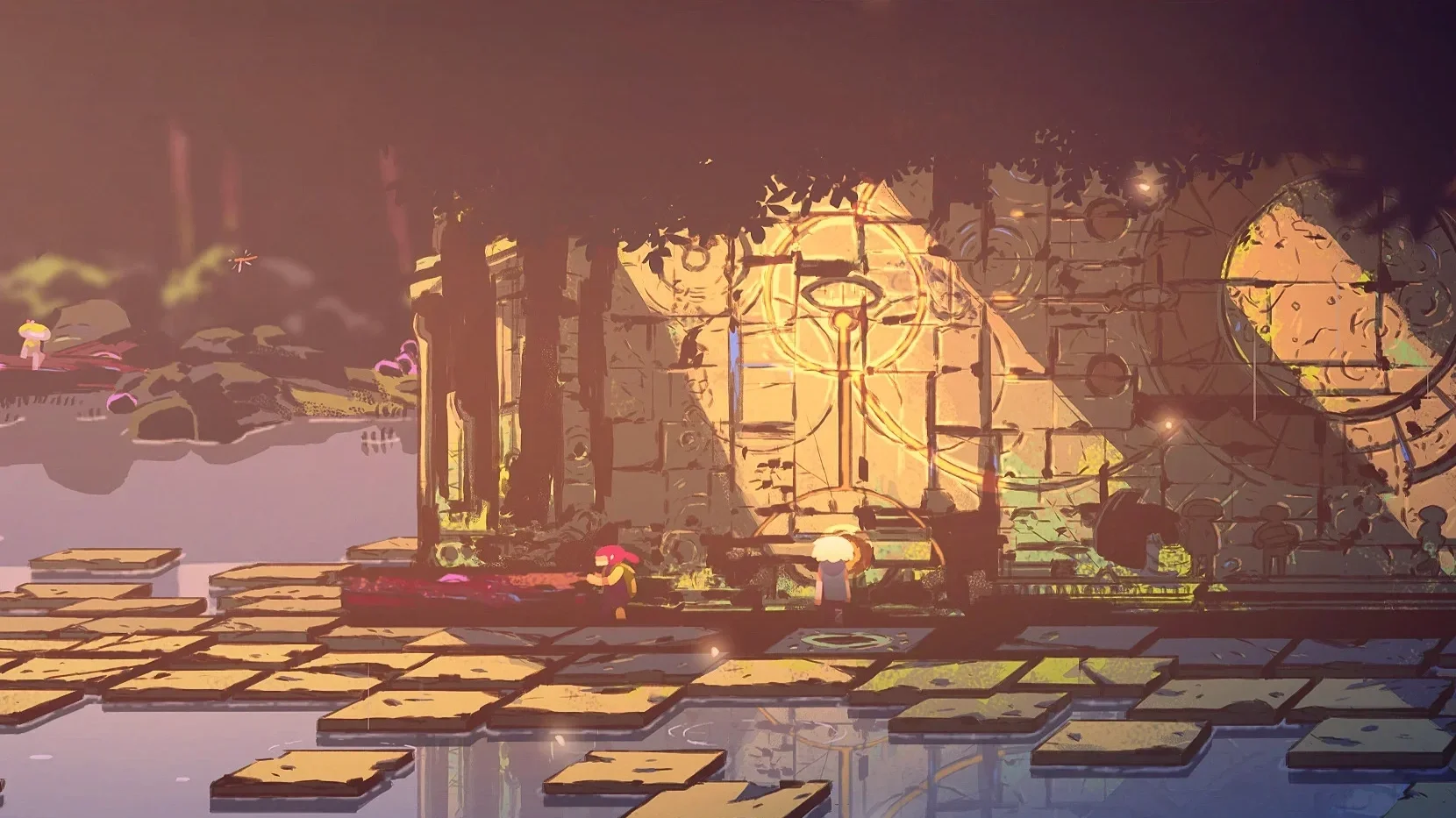
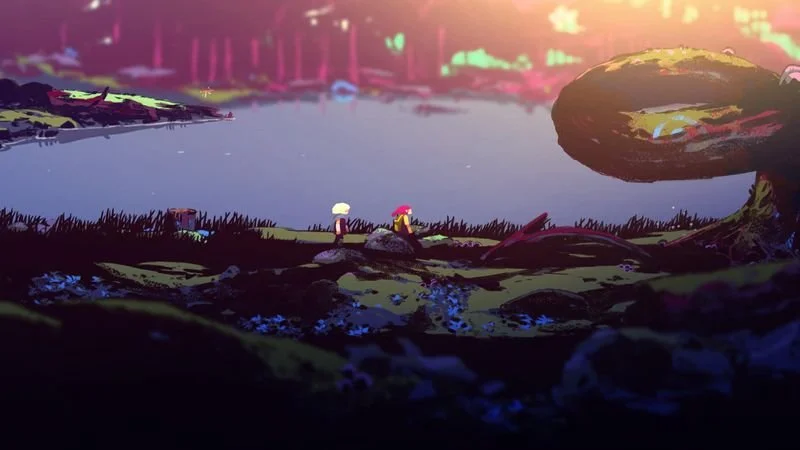
Visually, this game is beautiful.
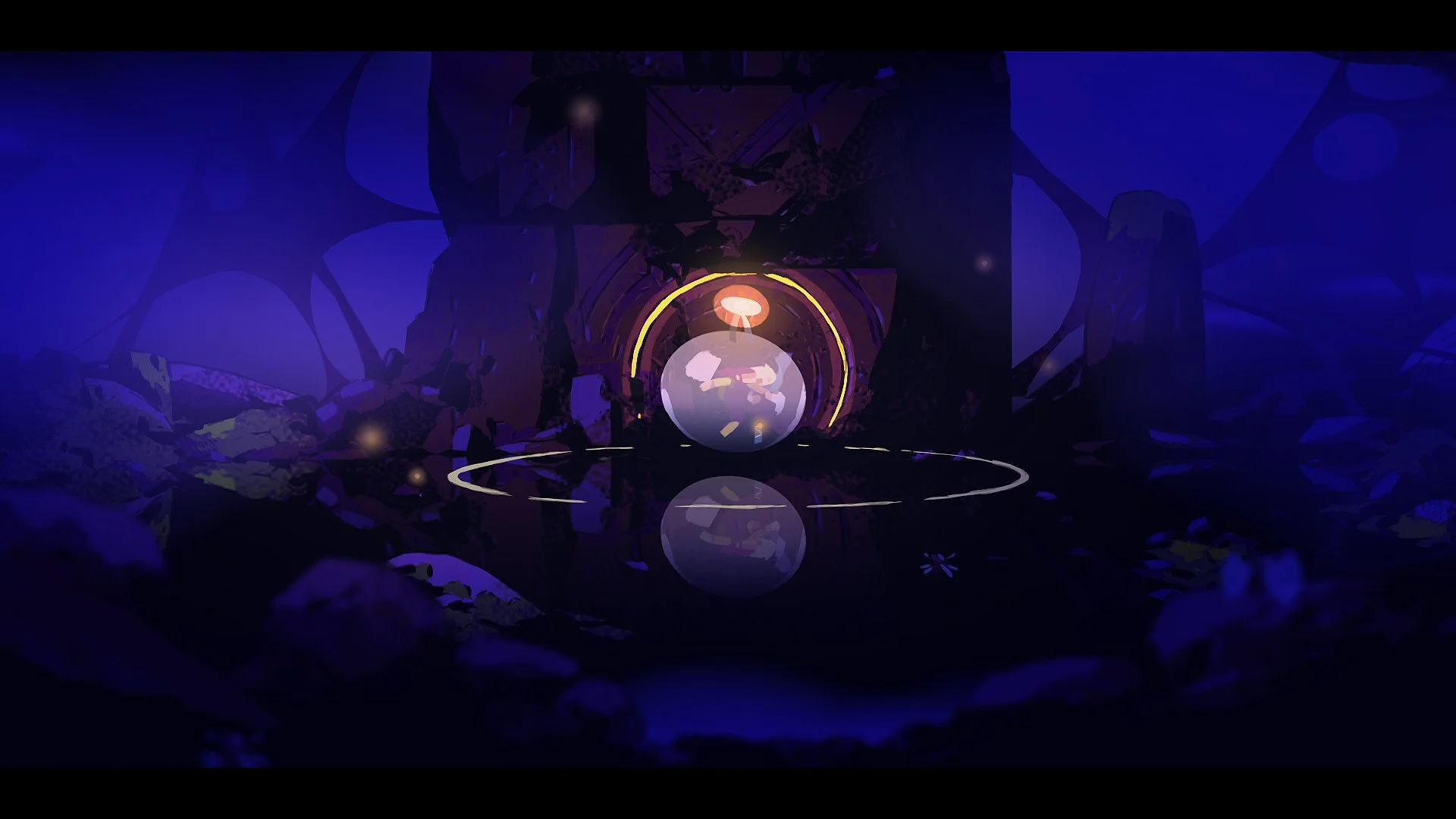
It has this hand-drawn watercolor look where every screen just feels carefully crafted. At times it looks like a moving storybook. Other times it feels dreamlike.
There's a lot of detail in the environments, but it never feels cluttered. The colors are vibrant without being overwhelming. The landscapes feel peaceful, but also mysterious.
And because the game doesn't bombard you with combat or dialogue, you actually have time to notice all of it.
You get to slow down and take the world in.
That's something a lot of modern games forget to do.
I've played through this game three times now, and there were definitely moments where me and my partner would just stop moving because the visuals and music together created a really peaceful atmosphere, and we just needed to soak it in.
Why the Co-op Works So Well
This game works really well as a co-op game.
It's another place where Voyage really shines.
A lot of co-op games technically allow two players. One person usually ends up feeling less important or just dragged along for the ride.
That's not the case here.
Both players feel equally involved. You help each other climb ledges. You move objects together. You solve puzzles together. And you navigate the world as a pair.
Neither player feels useless.
Neither player feels like they're just following behind.
It actually feels like two people sharing the same journey.
And I think that matters a lot in co-op design because yeah, if one player gets bored, the whole experience kind of just falls apart.
Voyage just avoids that completely.
Relaxed Puzzle Design
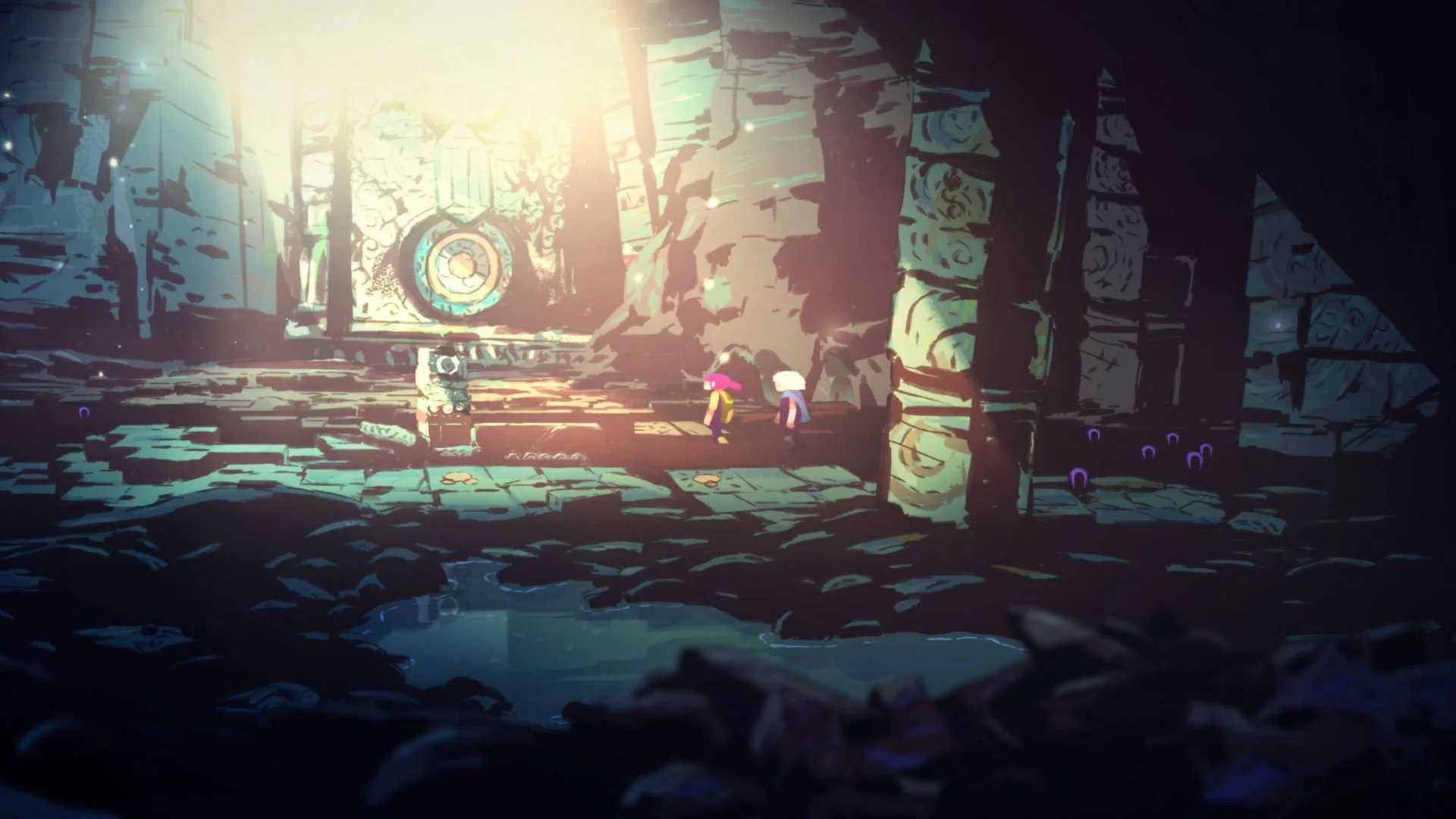
The puzzles are really relaxed.
So, if you're looking for brutally difficult puzzles, this probably isn't the game for you.
Mechanically, this is a very simple game. The puzzles are mostly about moving objects, activating paths, helping each other reach places, and interacting with the environment.
I'm sure there's going to be plenty of people that are going to wish that this game had more challenge.
I don't see that as a weakness for this game.
The puzzles are just not the main event.
They exist to keep both players engaged and moving forward together without killing the atmosphere.
You're not going to spend 40 minutes stuck in one room yelling at each other.
This is the kind of game where the gameplay supports the mood instead of overpowering it.
I think a lot of co-op games could learn from that.
Why Voyage Feels So Cozy
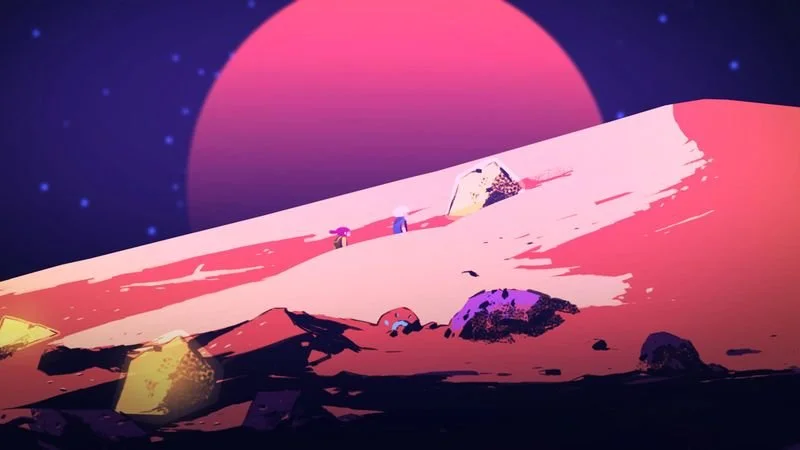
Voyage is cozy.
That's the best word for it.
It's peaceful. It's warm, quiet, and emotional.
There's very little danger, very little stress, very little conflict, and somehow it still holds your attention.
And I think that's really hard to pull off.
Most games rely on non-stop action, upgrades, combat, or challenge to keep players engaged.
Voyage relies almost entirely on atmosphere and emotion.
The Soundtrack and Emotional Design
The soundtrack does a lot of heavy lifting here.
It's subtle, emotional, and immersive without trying too hard.
Nothing feels overdramatic. Nothing feels forced. It just complements what is actually happening on screen.
There are moments where the visuals and music line up perfectly and you kind of stop thinking about mechanics entirely.
You just really sink into the experience.
This is genuinely one of those games where I'd recommend playing with headphones or decent speakers because it really does make a difference.
The Little Details That Make Voyage Special
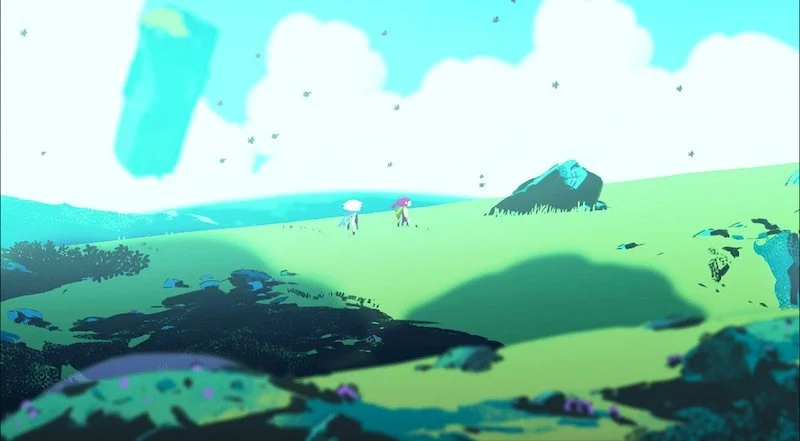
There are little touches throughout Voyage that really stick with you.
The pacing feels intentional.
Even the way the camera frames scenes sometimes makes it feel less like a traditional game and more like you're watching a story unfold around you.
And then there's the hug mechanic.
You can hug each other.
It doesn't unlock anything. It doesn't give you points. It's just there.
And honestly, I kind of just love that because it tells you exactly what this game values.
It's about connection over complexity.
Shared experience over challenge.
Why Nobody Played Voyage
So, why didn't this game blow up?
Honestly, I think Voyage got overlooked because it doesn't sell itself in an obvious way.
It's not packed with combat. It's not some giant online game. It doesn't have crazy boss fights or massive progression systems.
It's just a short, beautiful co-op experience.
And in today's market, games like that often get buried.
But that doesn't make them any less meaningful.
Not only that, it's just a small-budget indie game that people probably just didn't even notice or know what it was.
And for a while, it was only on Steam, so console gamers probably missed it.
But now it's on just about every modern platform.
Just because the game doesn't quite fit into the mold of modern gaming doesn't take away the unique experience that it offers.
Sometimes these smaller indie games that are more focused on just having an experience, telling a story, or capturing a certain feeling, actually stick with you longer.
They have a long-lasting impact on you.
At least for me, I would much rather have a game like this over a AAA massive budget game with unlimited marketing behind it.
There's a time and place for those games, but sometimes I think games like that have so many people involved that they kind of lose track of what they were trying to do to begin with.
The great thing about these smaller indie games is they really do stay true to the developer's original vision.
Co-op Games as Art
I love the conversation of video games being art.
And there's a number of games that have been thrown into that conversation. They've been called art games.
Games like GRIS, Journey, Shadow of the Colossus, and Limbo, just to name a few.
These are games that often tell a story in a unique way. They're atmospheric. The music and visuals often work together. Sometimes they have little to no dialogue, and the story is told through actions and gameplay.
This style of video game, the art game, has become one of my favorite genres in all of gaming.
But even though we see plenty of games that are described as art games, we don't really see that many of them that are actually built around co-op.
Reanimal is a recent example that was built around co-op, and I think it did a really great job.
Voyage just might be my favorite co-op art game.
Playing Voyage With My Daughter
I played this game with my daughter a couple of years ago. She must have been about six years old, and we beat it in one sitting.
You might think that a game like this could be boring for a little kid because it might not keep their attention, but believe it or not, she was able to focus the entire time.
I think it's because the game does a really good job of constantly moving forward.
Even though the puzzles aren't that challenging, that works in its favor because you never really get caught up or slowed down.
If you do have to stop to do some kind of puzzle, it's pretty easy to solve and then continue forward.
That's the main driving force of the game.
You're constantly moving forward.
A Game Meant to Be Experienced Together
You don't know why, and you don't really need to know why.
Even when you get to the end, the story is pretty vague. You don't exactly have a clear answer.
It's all up for interpretation.
But like I said, this game is about the experience.
While you're moving through the environments, you just take it all in.
The visuals, the music, and the overall atmosphere.
And the fact that you're able to share this with a partner is, I think, why it's so special to me.
I think video games all have different goals and purposes.
Some are meant to be challenging where you just try over and over again until you get good at it.
Others are just meant to be experienced.
Voyage is a game meant to be experienced with a partner.
Voyage Isn't for Everybody
I don't think this game is for everybody.
I think a lot of people are going to play this and not enjoy it.
You might not be able to just slow down and take it in, and that's okay.
This game is probably just not for you.
And to be fair, Voyage really isn't a perfect game.
There are a few parts where you're going to have to backtrack a little bit.
And sometimes when you're moving something for a puzzle, it takes way too long.
So there are moments like that that could turn people off.
But if you are open-minded and you want to try something that's a little different, something a little more relaxed and cozy, give Voyage a try.
You really only need two hours and a partner.
One of the Most Underrated Co-op Games Ever
Voyage really can be one of the most unique and meaningful co-op experiences that you can ever have.
I cover a ton of couch co-op games. Hundreds of them. Retro games, modern games, obscure games, hidden gems, new releases, and AAA games.
And Voyage, for some reason, still sticks in my mind years later.
That tells me something.
Not every game needs to be massive to matter.
Sometimes a game can be small, simple, and still leave a lasting impression.
Voyage definitely did that.
If you want non-stop action, this isn't it.
If you want hardcore challenge, this isn't it.
If you want constant combat and huge set pieces, this is not it.
If you want something more cozy, relaxing, and you just want to have an experience with your partner, that's what Voyage is.
To me, this is easily one of the most underrated couch co-op games I've ever played.
And honestly, I think way more people should experience it.