
Most fighting games are built around beating up the person sitting right next to you, but there are some where you can team up with the person sitting next to you instead.
Over the years, developers came up with a few different ways to make fighting games more cooperative. Sometimes they put multiple fighters on screen at the same time in two-on-two battles, and then sometimes they let players team up against a boss, and that becomes a two-on-one battle. But the more common option is usually tag team games. There’s really not a ton of co-op fighting games, but there might be more than you’d expect.
THE TWO-ON-TWO BATTLES
These games are the truest form of co-op fighting games. One of the earliest examples is Yuyu Hakusho: Makyo Toitsusen on the Mega Drive. This game came out in 1994 and it was developed by Treasure. It actually has four player support. You can do a free-for-all where all of you are fighting each other, and of course it has one-on-one battles, but the coolest part is the two-on-two. They actually have a tournament mode so you could team up against two other AI opponents, and that concept is still kind of unique today.
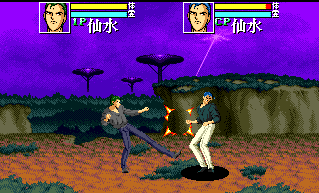
Yu Yu Hakusho: Makyo Toitsusen (Sega Genesis)
Treasure would eventually revisit a lot of those ideas on the Nintendo DS. They came out with two more anime-based games, Bleach: The Blade of Fate and Bleach: Dark Souls. Both of these games featured multiple fighters on screen, team battles, and multiple planes you could jump back and forth from. If you played that Yuyu Hakusho game, a lot of these mechanics will feel very familiar. These games aren’t exactly direct sequels, but they definitely feel like spiritual successors.
MORE FOUR-PLAYER FIGHTERS
Another game that took a similar approach was Guilty Gear Isuka. Instead of traditional oone-on-onematches, Isuka also had four player battles. As you’d expect, attacks can come from both directions, so the game actually implemented a dedicated button to turn your character around. Certain iterations of this game even included a co-op beat ‘em up mode. It’s definitely one of the weirder entries in the Guilty Gear series, but it’s also one of the few fighting games built around multiple active fighters.
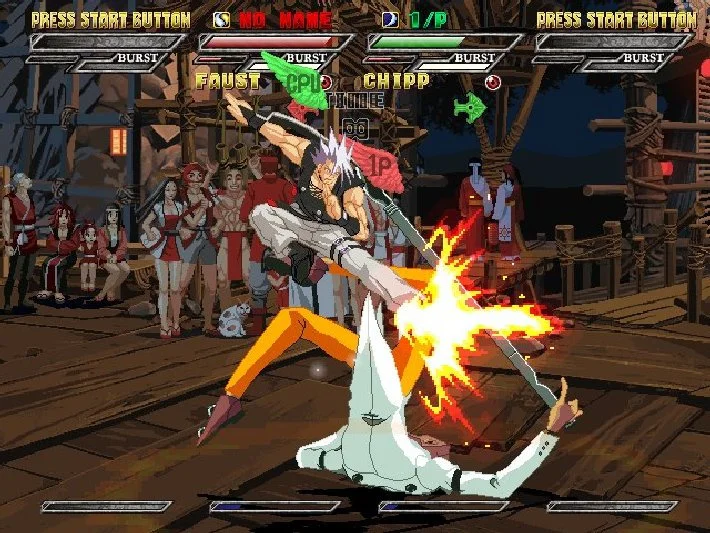
Guilty Gear Isuka
Street Fighter X Tekken did something very similar through its scramble battle mode, also supporting four player matches. But that’s not the only time Capcom did something like this. Back in the 90s, Capcom made Saturday Night Slam Masters, also known as Muscle Bomber in Japan. On its surface it looks like a wrestling game, but it’s really a fighting game disguised as a wrestling game, and it also had two-on-two battles. It came out in arcades, then was ported to the Genesis and the Super Nintendo. If you don’t want to team up against the AI, this is a really fun party game, and if you have a four-player adapter, you can do two-on-two matches with your friends. They also released an updated version called Muscle Bomber Duo, which only came out in arcades and totally removed the one-on-one option so it had more of a focus on the actual team gameplay. In this version the wrestlers also got some extra special moves, plus a dedicated button for grappling so you no longer just walked into the opponent and did it automatically.
And the newest game on this list, Diesel Legacy: The Brazen Age. This is one of the few modern attempts at building an entire fighting game around co-op gameplay. This one is definitely not my favorite on the list. I played it when it first came out and it never really clicked. I’ll definitely have to revisit it, because the games I mentioned before it handled co-op fighting in a much better way.
THE TWO-ON-ONE BATTLES
Like I mentioned, there were a lot of fighting games where you could do two-on-one battles. This is a concept that seemed like it might not actually work that well, but I really enjoy it. It’s not as easy as you might expect, having two against one. It’s designed really well to feel like it’s actually challenging and balanced.
The Street Fighter Alpha series is probably the most famous example. The first Street Fighter Alpha is fairly limited, as you can only play as Ryu and Ken versus M. Bison, and you have a shared health bar. This is where the term “dramatic battle” originated, and this mode was designed to directly recreate that big fight in Street Fighter 2: The Animated Movie, where Ryu and Ken have an incredibly emotional, dramatic team up and battle M. Bison. They continued to use this term in future releases. People in the arcades knew of this term just through word of mouth, but it wasn’t actually seen on screen as an official menu option until 1996, when Street Fighter Alpha was ported to home consoles on Saturn and PlayStation. In the arcade version, to play this mode you had to enter a code at the start menu: both players had to press and hold the start button simultaneously and press up then release start, then player one had to press up-up-light punch while player two simultaneously pressed up-up-heavy punch. Do it correctly and the screen cuts directly to the hidden M. Bison boss arena.
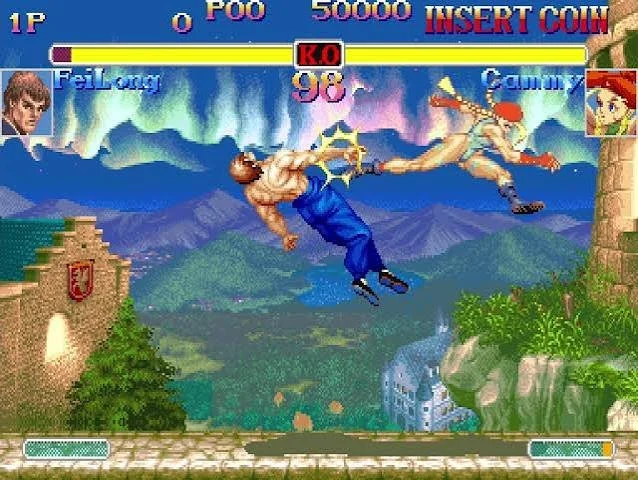
Street Fighter Alpha 2 – Dramatic Battle mode
Alpha 2 has a similar mode, but you’re able to choose more characters and go up against four different bosses. Unfortunately this one was only available in certain regions of the arcade release, and it’s still hidden behind a secret code, though it was a little easier to pull off. In the arcades, once you insert your coins, you press and hold all three kick buttons at once, then while holding those buttons you press the start button, and keep holding it until the character select screen loads up. Fortunately, the home console versions just have this mode included in the menu, so you don’t have to do any of that. Alpha 3 improved on it even more, with a dedicated story mode where you can play through the entire game in two-player co-op, two versus one. Years later, Ultra Street Fighter II came out on the Nintendo Switch and did the exact same thing: two players could select characters and work together two-on-one against an AI controlled opponent.
The earliest example of this concept I ever saw was Fatal Fury. This one had the same two-on-one matches, but it really wasn’t the main focus. The implementation here is very weird. At the character select screen, player two joins in and you both select your characters and start a match, so from there it’s two against one, but then at the end of every match you have to fight each other one-on-one. And that kind of sucks. Whoever wins moves on to the next match, and then you have to join in again. So it’s not ideal, but it’s cool that they even included this back in the day.
And we can’t forget about Dragon: The Bruce Lee Story. This was a game ported to a number of consoles, based off the biopic of the same name. But this game is terrible. It’s very clunky, the controls are stiff and not very responsive, and you can’t even choose your own character. You both just play as Bruce Lee for some reason. I would definitely just avoid this one if you can.
GIANT MONSTER BRAWLS
Then we had some giant monster games. King of the Monsters had players go up against giant creatures, battling through the cities before ending up in a big boss fight with one of these giant monsters. It’s not a traditional fighting game, and it actually has some beat ‘em up mechanics, but ultimately the core gameplay feels like a fighting game, so it should be mentioned. Monster Maulers took a very similar approach, also having you take on giant monster bosses. It’s one of those arcade games that feels like a fighting game, a boss rush, and also again had some beat ‘em up elements. And then there’s Oni: The Ninja Master, an arcade game I just found out about myself, which is another one very similar to those last few, teaming up doing two-on-one battles against giant monsters. Like those other games, I think this one is often overlooked, and when it comes to co-op fighting games, it’s totally a hidden gem.
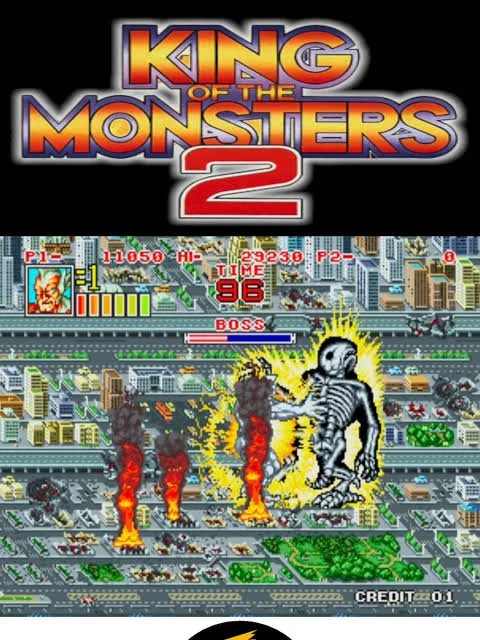
King of the Monsters (Neo Geo)
Then there were some titles that had fighting game elements but also included other gameplay. In the arcades we had Mega Man: The Power Battle and Mega Man 2: The Power Fighters. These games took Mega Man gameplay and turned it into a one-on-one fighter, so you and a friend team up and do two-on-one fights against classic Mega Man enemies. Still to this day, these are some of the only Mega Man games you can actually play co-op. And Granblue Fantasy Versus took an RPG and made the battles feel like a fighting game, which is one of the most unique games on this list.
THE TAG TEAM CO-OP FIGHTERS
This is where most fighting games ended up. Instead of having both players on screen at the same time, you took turns tagging in and out. Obviously this is not the ideal way to play with someone, but I still had a ton of fun playing some of these games back in the day, especially at the arcade.
Probably the most famous example is Tekken Tag Tournament. As the name implies, the entire game is based around tag team fighting. Tekken Tag Tournament 2 grew that idea and added more playable fighters. And then we had all of those Marvel fighting games, which I think really elevated the tag team genre and made it a lot more popular. First we had X-Men vs. Street Fighter, which introduced the concept to a lot of players, then Marvel Super Heroes vs. Street Fighter built upon it even more, and Marvel vs. Capcom took the idea even further.
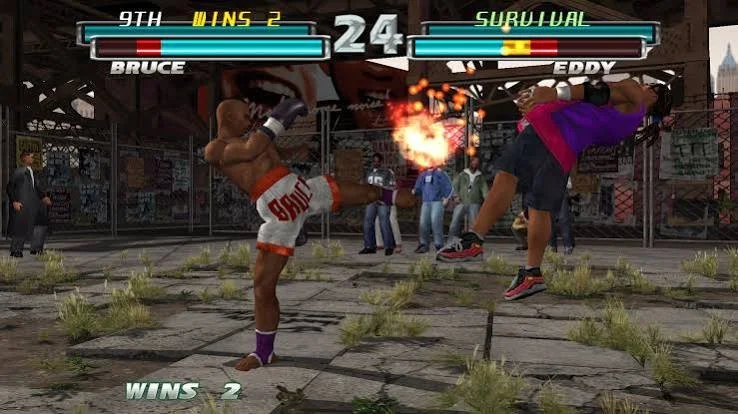
Tekken Tag Tournament
And then we had the Dead or Alive games. A lot of them have tag team mechanics, and the one I played the most was Dead or Alive 3 on the original Xbox. I was just blown away by this game. It was my favorite game on the original Xbox for a while. I remember seeing the graphics and thinking nothing will ever look better than this. I got really good at this game and would team up with my friends and do tag team matches all the time, and sometimes we’d get four people together and do two-on-two tag matches.
One of the most interesting games in this category is Mortal Kombat from 2011. The tag mode isn’t just about swapping characters. Players could extend combos, set up for assists, and actually coordinate attacks in a way that felt more cooperative than some of the other tag team fighters. Unfortunately, that mode never returned in any later Mortal Kombat game.
FINAL THOUGHTS
Co-op fighting games never really became a major genre. There were some standout games, but as you can see, a lot of them were just tag team based. What’s your favorite co-op fighting game? And if I missed any, let me know.