
Sometimes I wish I grew up in Japan. Primarily because I was obsessed with Dragon Ball Z as a kid, and also because I wish I could have played these co-op games.
THE GREAT BATTLE SERIES (SUPER FAMICOM)
Let’s start with the Great Battle series. Ever since I found out about these games, I have been really fascinated by them. Basically, it’s a series that unites heroes from three massive Japanese pop culture universes: Ultraman, Kamen Rider, and Mobile Suit Gundam. Pretty much every game in the series is a totally different genre, and most of them have co-op. The first one, which came out in 1990, did not have co-op, but The Great Battle 2: Last Fighter Twin, in 1992, included co-op gameplay.
The first game was a top-down shooter, and this second one is a 2D sidescrolling beat ‘em up. The third game, The Great Battle 3, came out in 1993, another sidescrolling beat ‘em up, but with a fantasy theme, so it feels more like Golden Axe or a hack-and-slash type of game. The graphics here are awesome.
The Great Battle 5 (Super Famicom)
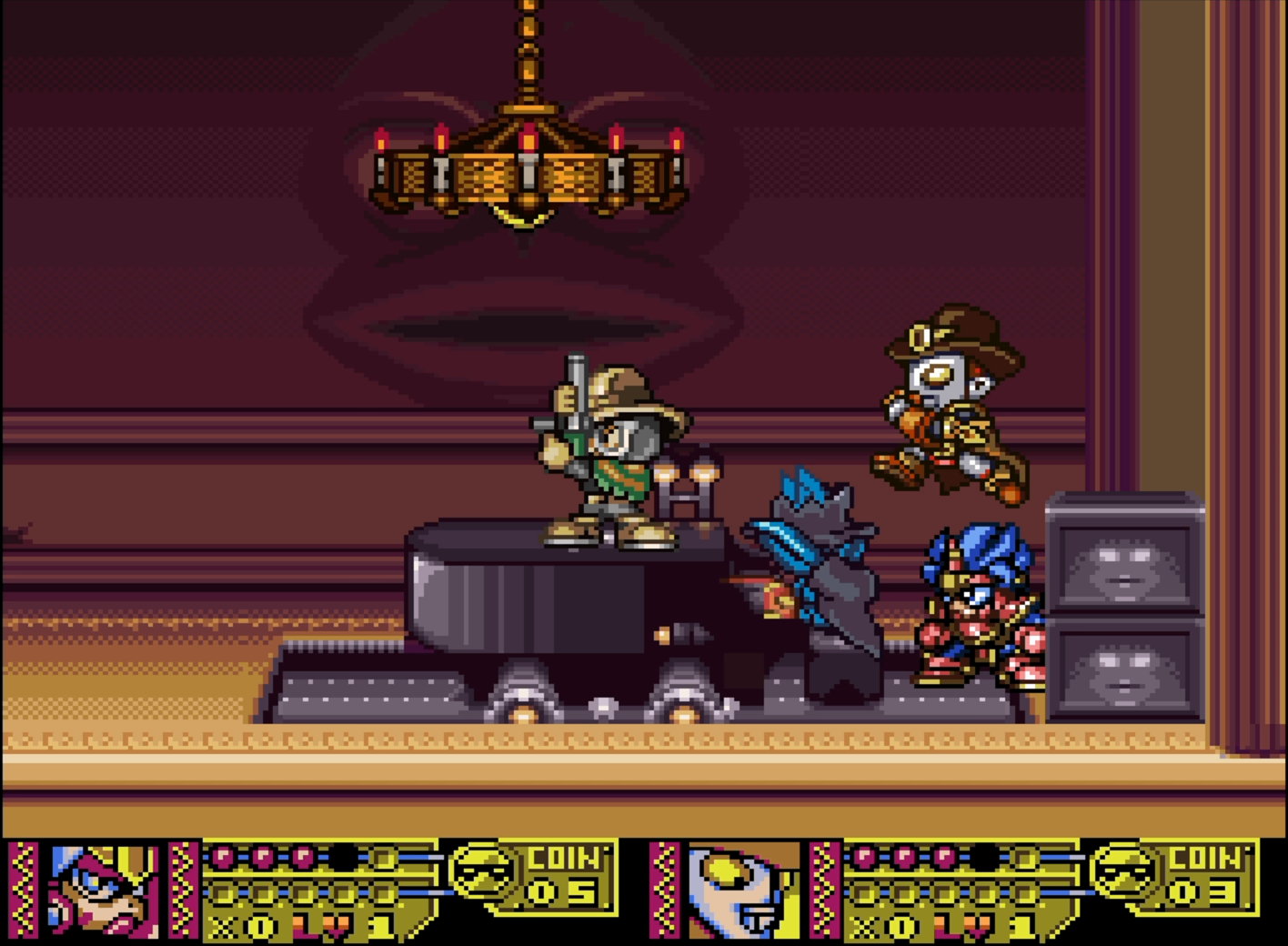
Then we had The Great Battle 4, which came out in 1994, kind of a run-and-gun shooter platformer with a modern futuristic setting, actually kind of similar to a Mega Man game. And The Great Battle 5 came out in 1995, and this one’s really cool, with a couple different styles of gameplay: some levels are a Cabal shooter with an Old West theme, definitely inspired by Wild Guns, and other levels are just more of a run-and-gun shooter. Later on the PS1 there was another game in the series, but that one did not have co-op.
If you’re a fan of the Super Famicom and want to play some games that never came out in the US, I highly recommend all of these. Two through five are all co-op, and there’s just a lot of variety here, and these are all games you can play without any knowledge of the Japanese language. They’re all very approachable.
FORTIFIED ZONE 2 (GAME BOY)
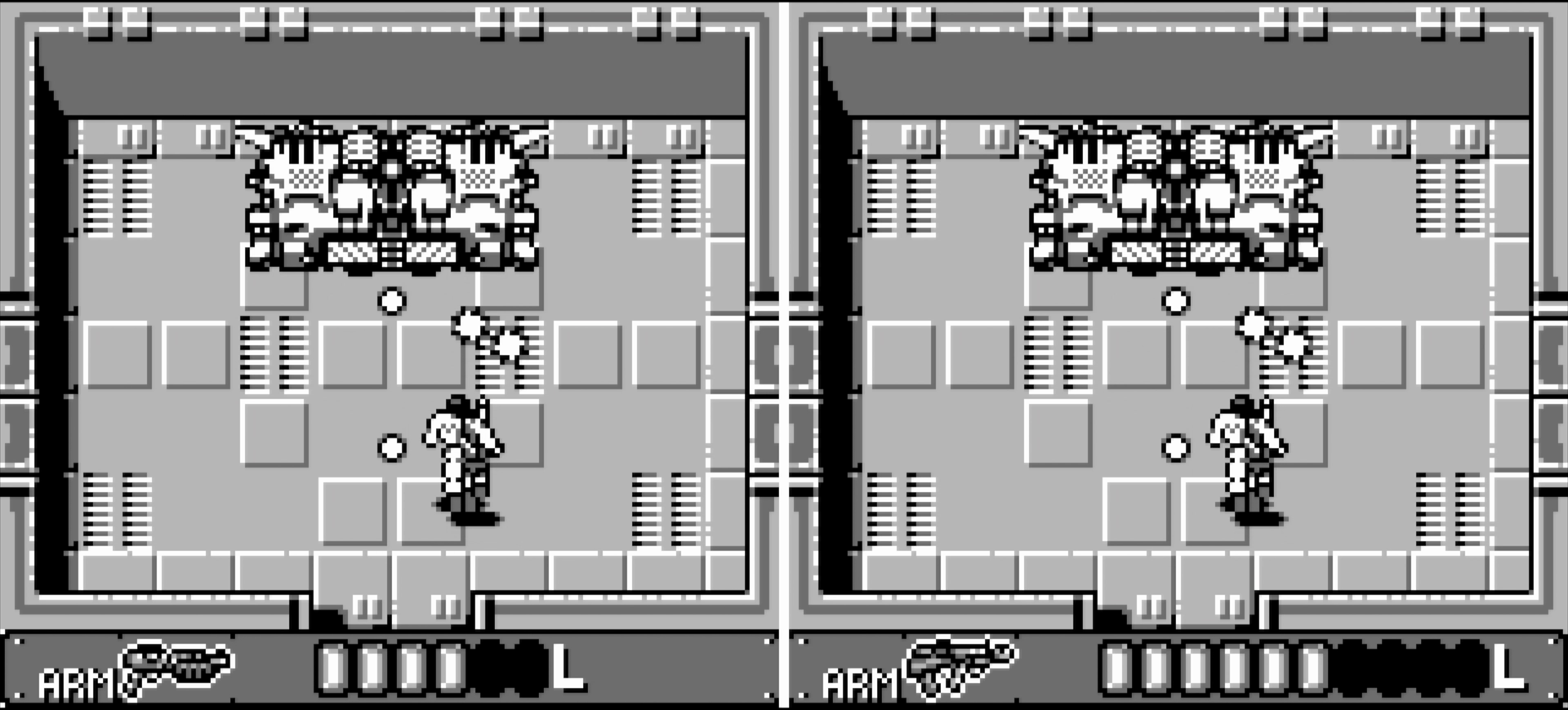
Fortified Zone 2 is a co-op game that only came out in Japan on the Game Boy. This is a sequel, and the first game came out on the original Game Boy. It’s kind of more of the same, but with better visuals and I think better gameplay too. The best way to describe this game is it’s kind of a mix between an old school Zelda game and a run-and-gun shooter. You basically go from room to room and shoot all the enemies. The benefit of playing this on Game Boy is you each have your own screen, though of course you have to have your own copy of the game as well as your own Game Boy and a link cable.
You’re not stuck to the same screen, so it’s a pretty good strategy to split up and take out the enemies separately, or double up your firepower and explore these dungeons together. This is a game I never really hear anybody talk about, same with the first one, but they’re both really good games.
Fortified Zone 2 (Game Boy)
SHINREI JUSATSUSHI TAROMARU (SEGA SATURN)
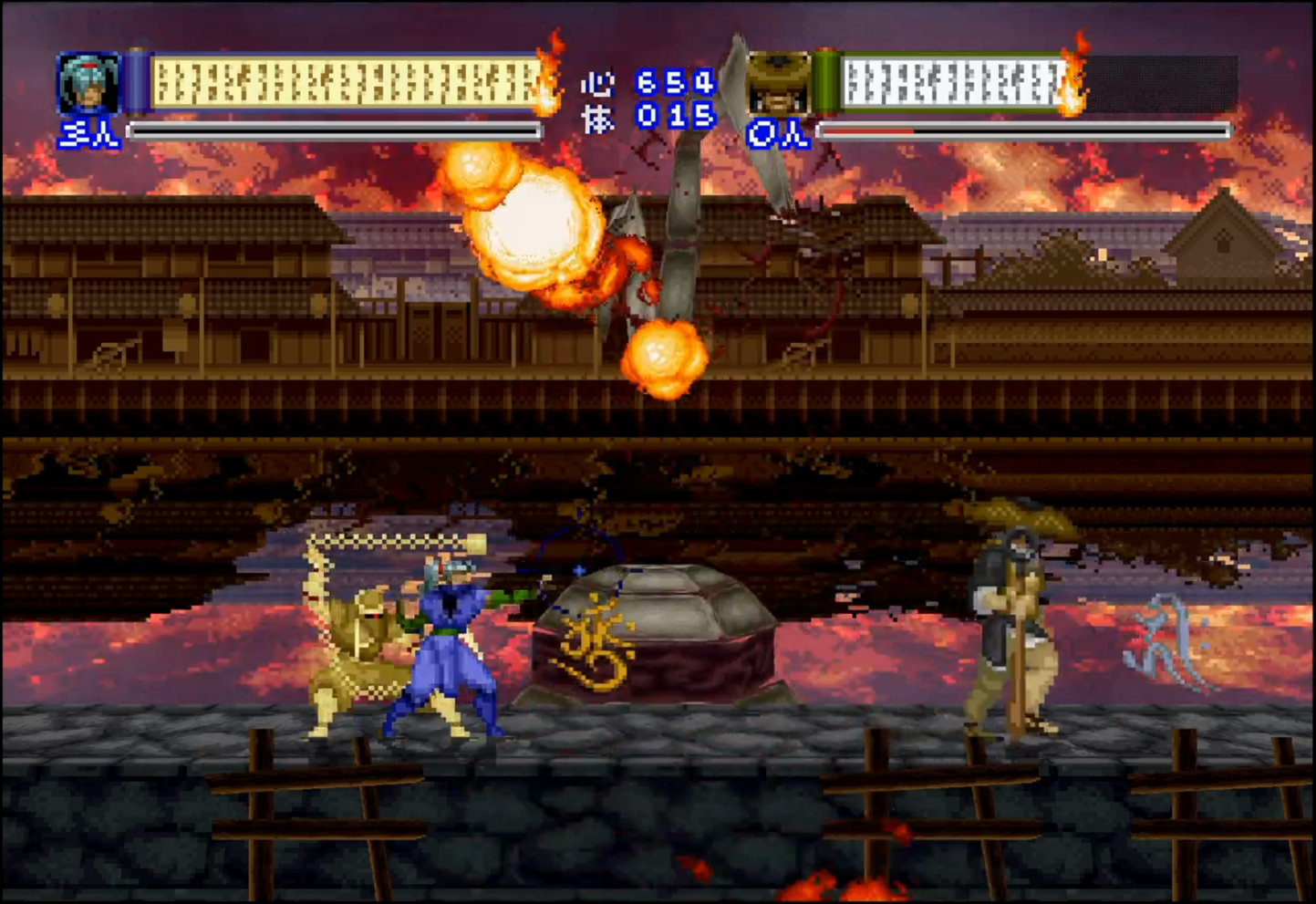
This game only came out in Japan on the Sega Saturn. I think it’s mostly known for being an incredibly expensive game if you buy the physical copy, complete in box going anywhere from $1,000 to $2,000. But this is a rare instance where one of these really rare, expensive games is actually incredibly good. Ultimately it’s a run-and-gun shooter, but a little more unique than that. There’s a little target cursor that moves around and automatically locks onto the closest enemy on screen, so rather than aiming manually, you rapidly mash the attack button to fire different energy blasts at the enemy.
You’re not able to run or move while firing, so it takes a little getting used to as far as coordinating the attack and moving back and forth, getting used to that rhythm. If you hold the attack button, it charges a powerful blast. Alisia Dragoon is the closest game I’ve seen to this exact type of gameplay, which came out on the Sega Genesis. Another cool feature is that it’s pretty much non-stop action, as soon as you clear a level you just keep moving to the next one, no cut in between, just seamless transitions from area to area.
It also has a nice blend of 2D and 3D assets. So if you have a couple thousand dollars lying around, I definitely recommend you buy this game, or play it through lesser official means, if you know what I mean.
Shinrei Jusatsushi Taromaru (Sega Saturn)
SEGASONIC THE HEDGEHOG (ARCADE)
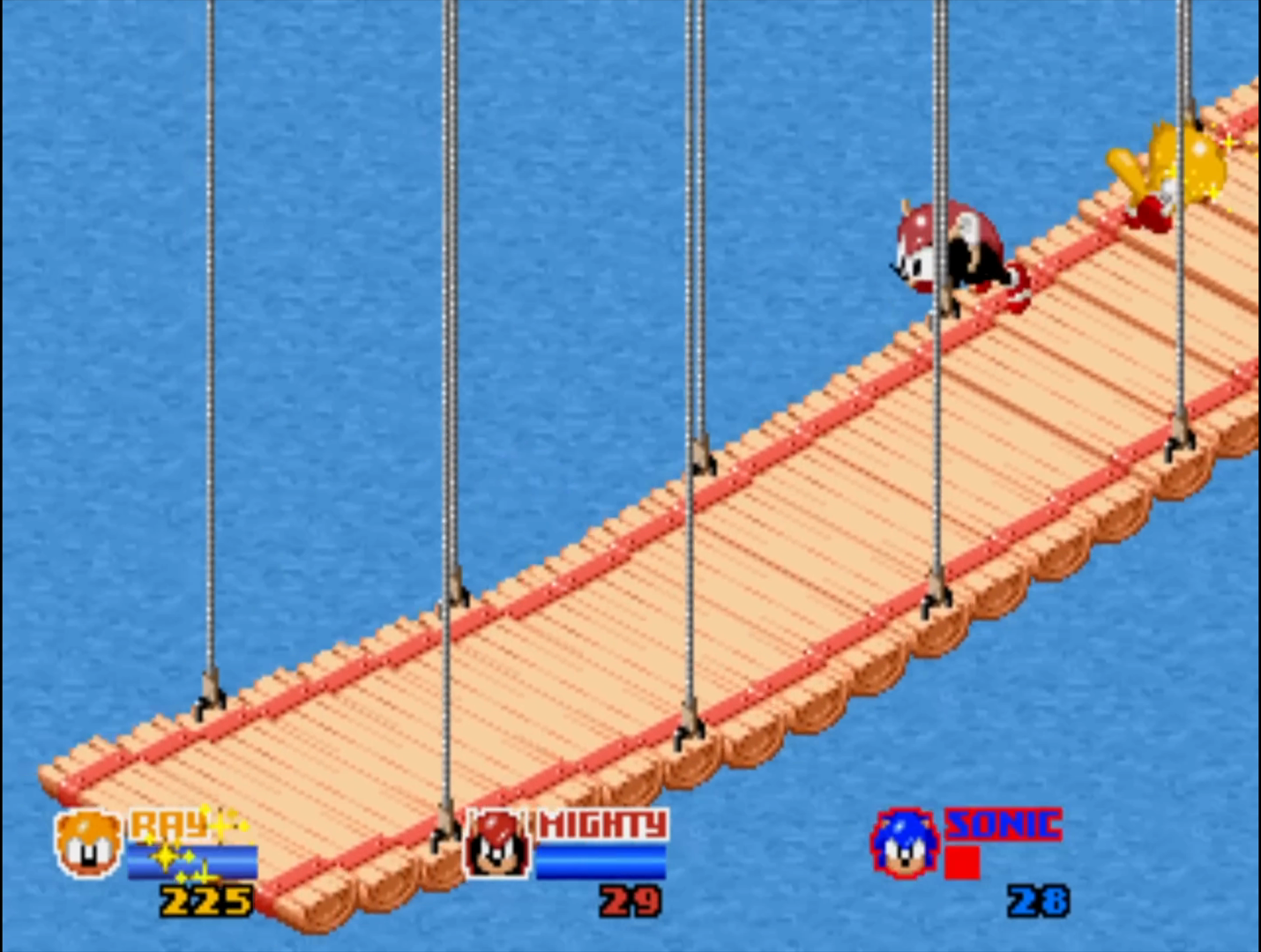
SegaSonic the Hedgehog is an arcade game that only came out in Japan, and to this day it’s one of the only Sonic games I’m aware of that never got a worldwide release. What’s really cool about this game is, first, it’s a three-player co-op game, and second, the hardware itself: you play it with three separate trackballs, and that’s how you move your characters. You play as Sonic, Mighty, and Ray the Flying Squirrel. This one is very different from the traditional Sonic game, instead of a 2D platformer you’re playing from an isometric view, and the goal is just to run through these levels as fast as you can, trying to avoid as many obstacles as possible.
You use the trackball to move your character around, and there’s one button to jump, and instead of rings, each character has their own health bar. Like a lot of arcade games from the time, this isn’t that long, only seven levels, so you should be able to run through it pretty quick. I think due to that unique hardware with the trackball, they were never able to successfully port this to any console. There was talk of it going to the 32X, but that never happened, and years later in 2005 there were rumors of it being ported to the Sonic Gems Collection, but none of that ever happened either.
So still to this day, the only way to play this is if you go all the way to Japan, find an arcade, and happen to come across this specific cabinet out in the wild. That’s the only way, or a less official means, if that’s something you’re into.
SegaSonic the Hedgehog (Arcade)
THE FIREMEN 2: PETE & DANNY (PS1)
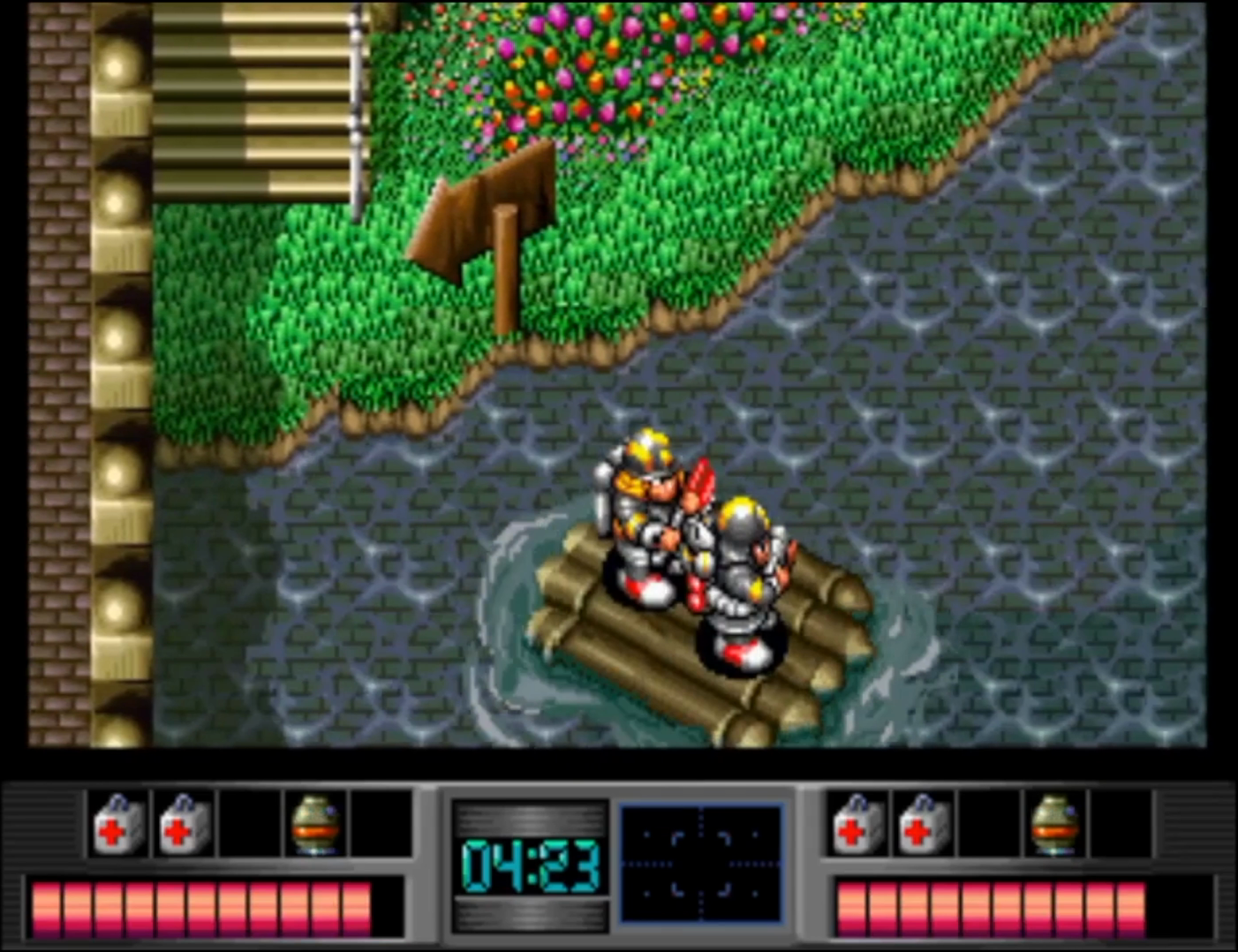
The Firemen 2: Pete & Danny is a top-down action game that came out exclusively on the PS1 in Japan, and as the name implies, it’s a sequel. The original came out on the Super Famicom, and that was only a single player game, even though there were two characters. This game is pretty interesting, since instead of traditional shooting mechanics, you play as two firefighters with asymmetrical gameplay. Player one is long range, using a hose to suppress tall fires as well as ground flames close by, while player two has an axe and is able to chop through debris and clear fires at close range.
You also have screen-clearing water bombs you can use, and outside of clearing out fire, you have to rescue trapped civilians. I think this one is pretty unique, with really nice pixel art, which was always refreshing to see in the 32-bit era. This game eventually got a re-release as a PS1 Classic, so you could play it digitally on the PS3, PSP, and PS Vita, and this actually was available in the US, but it was left as is with no translation, so all the text and voice acting was still in Japanese.
The Firemen 2: Pete & Danny (PlayStation)
YU YU HAKUSHO: MAKYO TOITSUSEN (MEGA DRIVE)
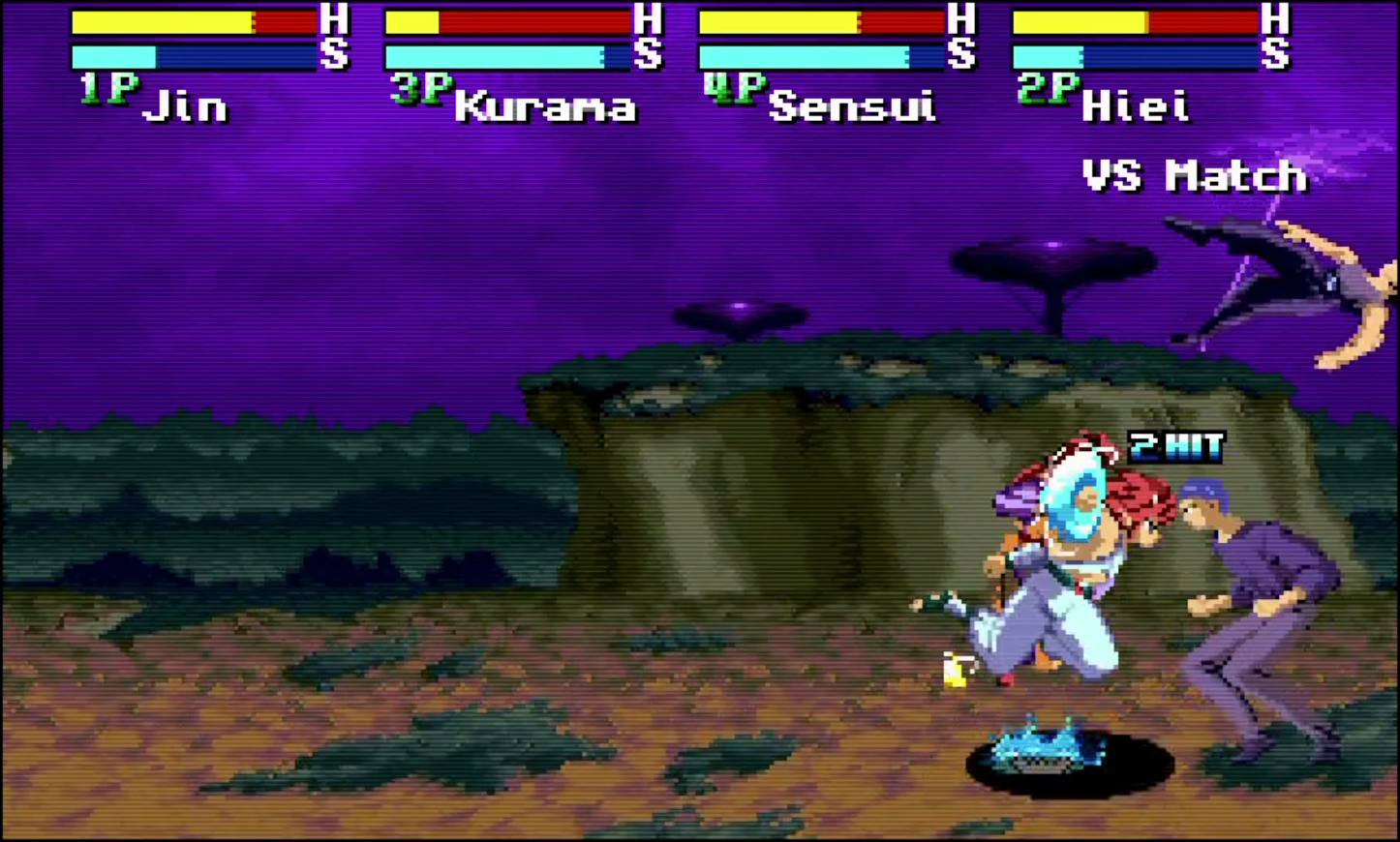
This is a fighting game made by Treasure that came out on the Mega Drive in Japan, and it’s one of those rare instances where you can actually play a fighting game in co-op. If you have a four-player adapter, you can actually do two-on-two battles with four players, which was also very unique for its time. The main story mode is single player, but there’s a tournament mode you can do co-op, where you and a human partner team up against the AI, two-on-two battles on teams.
The gameplay revolves around a dual plane system, foreground and background, and you’re able to jump back and forth between them, which is kind of nice when you have four players on screen at once, since you can split up and the chaos isn’t condensed to one area. I’m a huge fan of the Yu Yu Hakusho series, and I just recently rewatched the entire thing with my daughter, and I’ve got to say it’s probably my favorite anime of all time. So it was really nice to find a game based off one of my favorite series and have it actually be really good.
This is probably one of my favorite co-op fighting games ever. This game technically wasn’t stuck in Japan, as it came out in 1999 in Brazil, and then years later on the Mega Drive Mini in 2019 it got an official re-release, though only on the Japanese version of the Mega Drive. One interesting thing about that, though, is if you change the console’s language to English, you get an official English localization of this game, so it does exist, and the title is Yu Yu Hakusho: Battle to Unite the Demon Plane.
Yu Yu Hakusho: Makyo Toitsusen (Mega Drive)
GANBARE GOEMON 2 (SUPER FAMICOM)
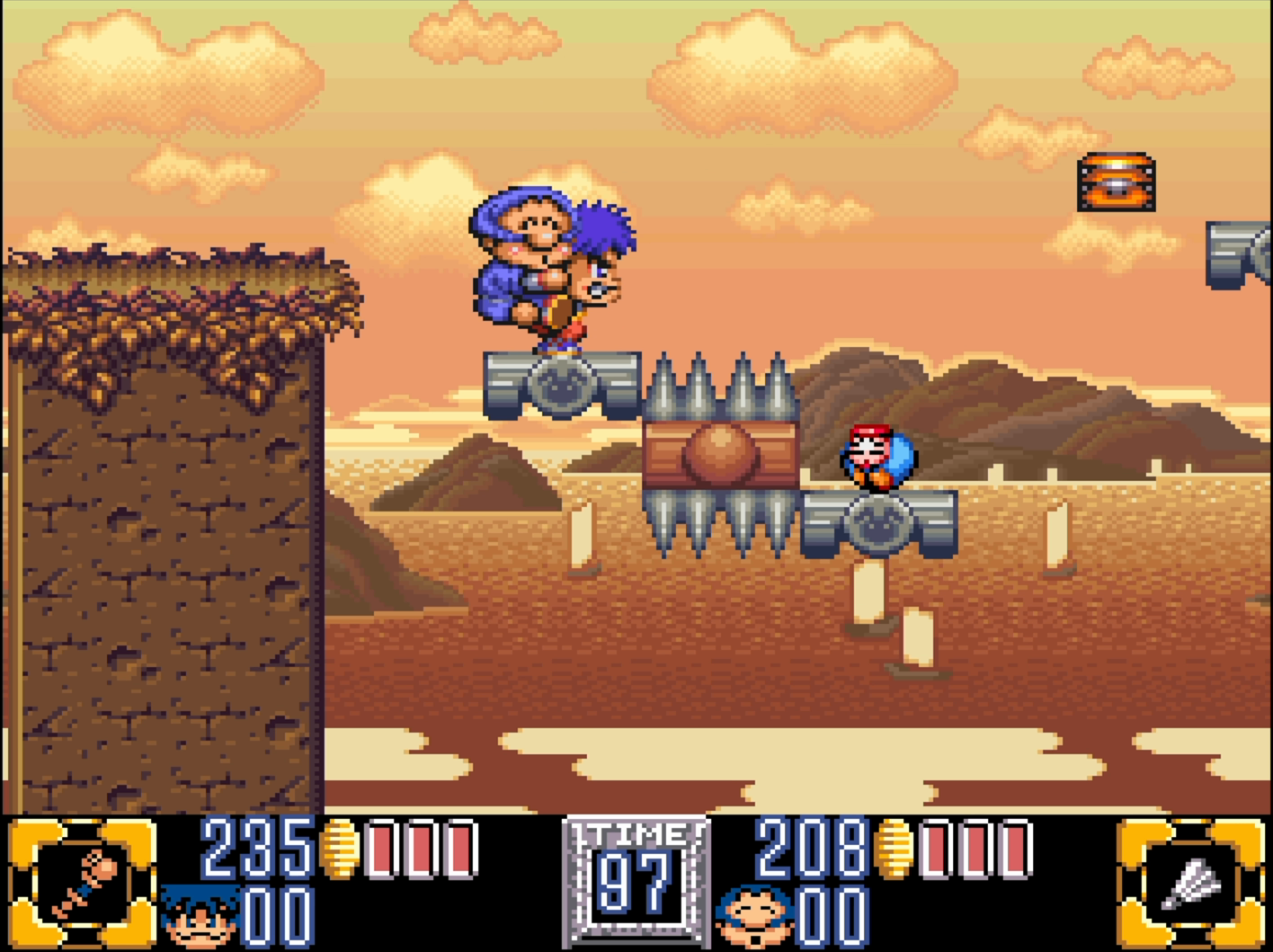
Ganbare Goemon 2 came out exclusively in 1993 in Japan on Super Famicom. This is a sidescrolling action platformer set in feudal Japan, with a Super Mario World style overworld map, and you can choose from three different players: Goemon, who’s kind of the more balanced player, Ebisumaru, who’s the stronger character, and the faster robotic ninja Sasuke. This game has a nice variety, with some really fun platforming sections, probably some of the best platforming of any 16-bit era game. One fun thing about these games is when the platforming gets a little more difficult in two player, you can just jump on your partner’s back, so the more skilled player can get through those parts.
Like a lot of the other games in the series, you can go into towns, buy equipment, and level your stats up, and all of that gameplay is broken up by big boss fights where you’re in the giant robot named Impact, which goes into a first-person mode kind of reminiscent of Punch-Out. I love all of the Goemon games, and this one might be the best one of the era. It got a port later to the Game Boy Advance in 2005 as part of a Japan-only compilation, and later a re-release on the Wii, the Wii U, and the 3DS on the Nintendo eShop, and at some point this year it’s supposed to get another re-release in a Goemon collection on modern platforms.
That said, all of those re-releases and ports were only in Japan, so it still hasn’t been released in the US. However, there are some fan translations of the original Super Famicom game if you want to go that route, and I’m not going to tell you how you do that.
Ganbare Goemon 2 (Super Famicom)
WAI WAI WORLD 2 (FAMICOM)
Wai Wai World 2 came out in 1991. This is another game by Konami, primarily a platformer, but the gameplay changes up a bit. It’s a crossover between a bunch of different Konami franchises, and you can transform into different characters based on those franchises: Simon Belmont from Castlevania, Bill Rizer from Contra, and Goemon from Mystical Ninja, and you’re able to use their signature weapons. The gameplay is constantly shifting across different styles, with branching paths. A lot of it is sidescrolling platforming, but there’s a Gradius style shoot ‘em up level, driving segments, and puzzle mini games, so there’s a lot of variety here, and the difficulty is not that bad.
When it comes to NES and Famicom games, this is definitely one of the easier games to recommend for less skilled players. The only port this game ever got was on the Wii U Virtual Console, but only in Japan, and unfortunately that has since been shut down, so there really is no legal way to play this game outside of playing it on the Famicom.
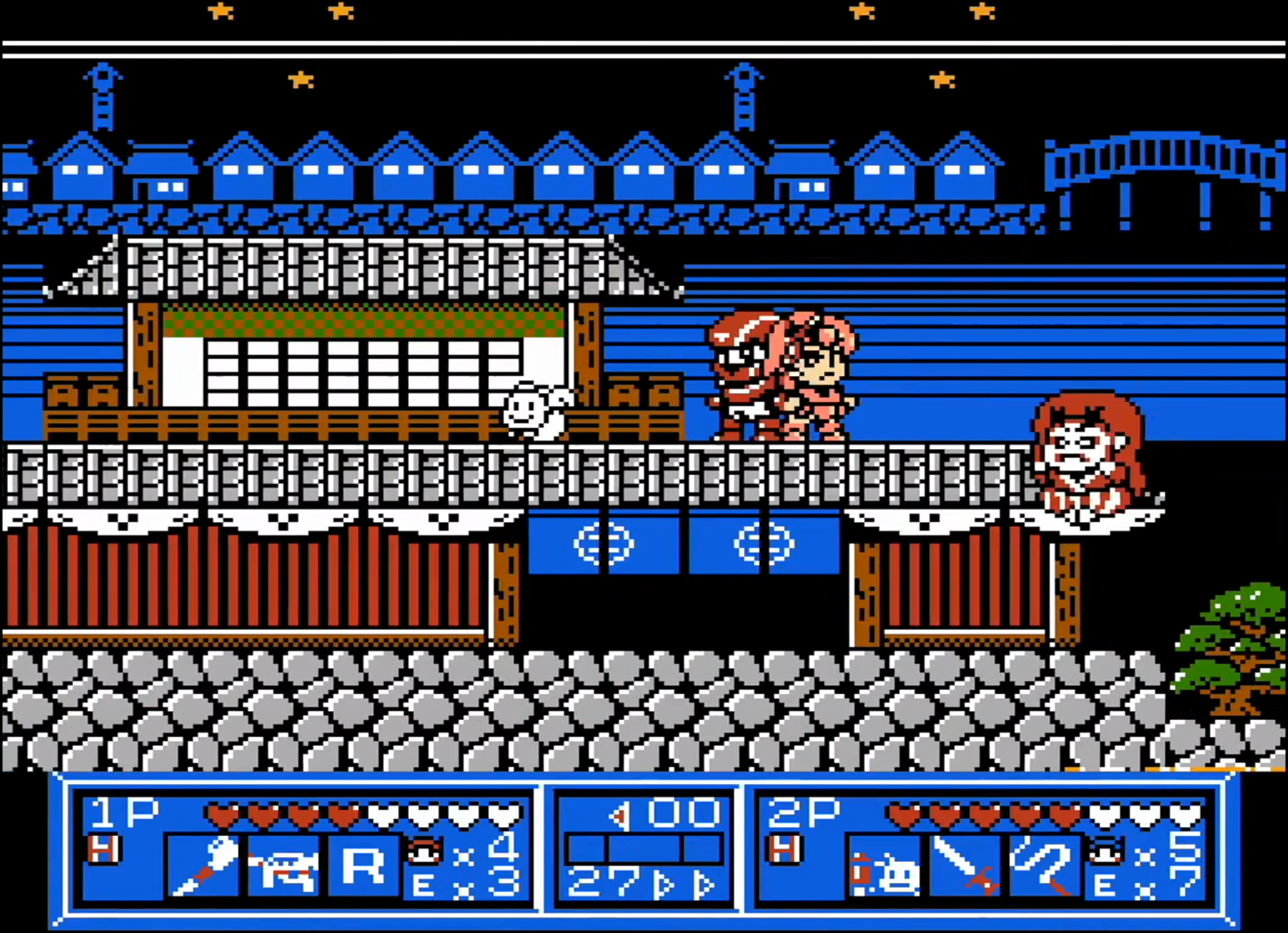
Wai Wai World 2 (Famicom)
KISHIN DOUJI ZENKI FX (PC-FX)
Kishin Douji Zenki FX came out exclusively on the PC-FX in Japan. If you don’t know what the PC-FX is, it’s a console that only came out in Japan, the follow-up to the PC Engine, or the TurboGrafx-16 in the US. This game came out in 1995, and it’s basically a sidescrolling beat ‘em up action game. It doesn’t have multiple planes, you can’t move up and down, only left to right, but it does pretty much play like a beat ‘em up otherwise. The gameplay primarily involves fighting a bunch of different bosses, with some platforming in between, but the main focus is the boss fights.
One of the cool things about this game is that the two playable characters are very different. Player one controls Zenki, who focuses on close-range physical attacks and can transform into a massive demon god, while player two controls the shrine maiden, who does long range projectiles so she can stand from a safe distance and shoot the bosses that way. Combining both styles of attack is really effective. But since this game was only released on the PC-FX, a lot of people never found it, because, well, nobody ever even played the PC-FX.
If you do have one of those consoles and can track down this game, it’s going to cost you a few hundred bucks. This is one of those games that’s just completely lost in the past, never ported anywhere else, only on this rare, obscure console, and that’s pretty unfortunate, because this is a really fun game, and that console was mostly known for text adventures and dating sim type games. This is one of the few action-based games on the whole system, so it’s definitely one of the best games on the PC-FX.
But not just that, it’s just a really good game that really should have been ported to other consoles, because it definitely deserves to be played.
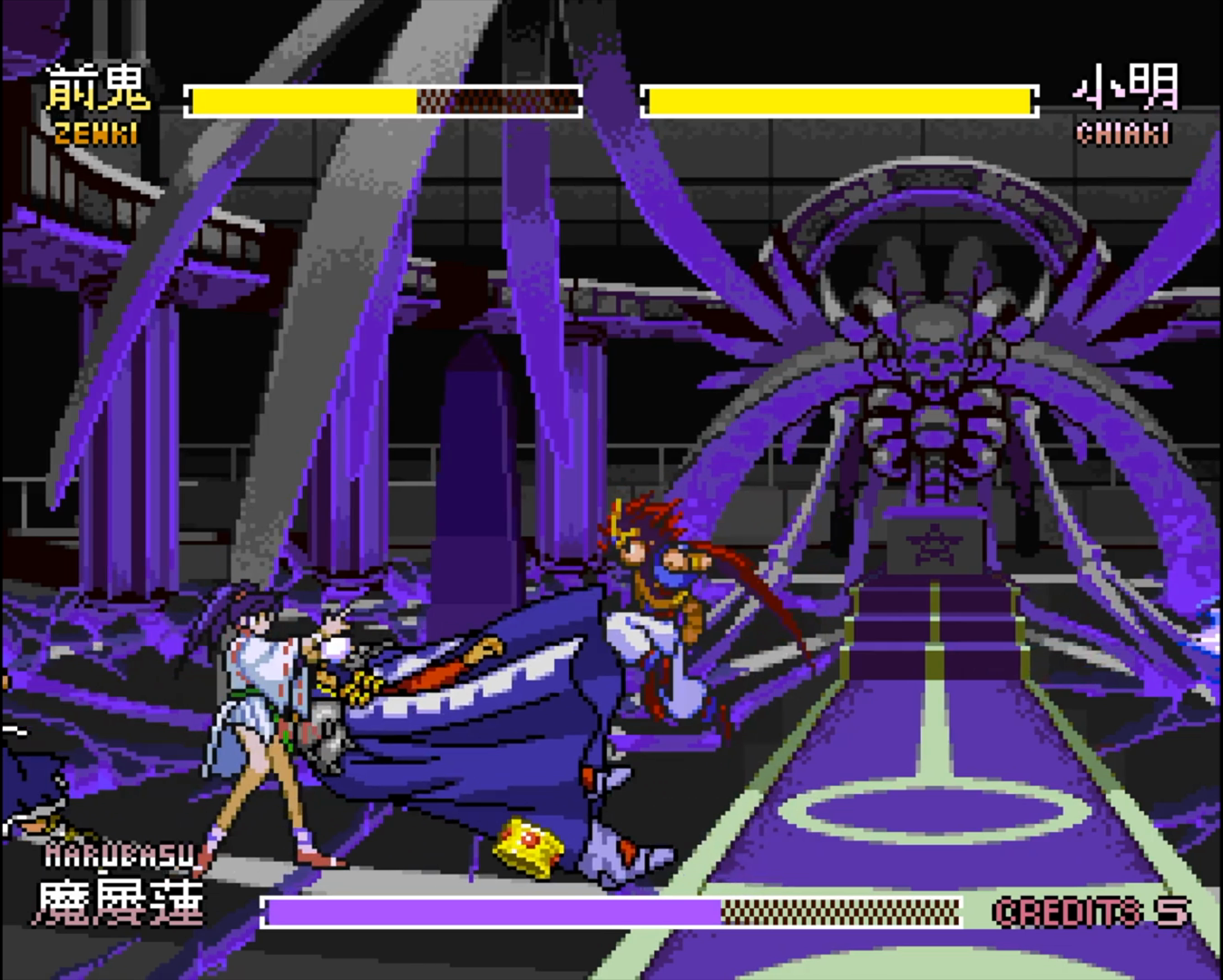
Kishin Douji Zenki FX (PC-FX)
SEVEN MANSIONS (DREAMCAST)
I have talked about this game numerous times, but if you haven’t heard about it, Seven Mansions is a survival horror game built around two-player co-op that only came out in Japan on the Sega Dreamcast. It was never ported anywhere else, but it did get a fan translation a few years ago, and that’s how I was able to play it. If you’re a fan of games like Resident Evil or Silent Hill, and wish you could play them two-player co-op, this really is the closest thing to that.
From all my research, I think this is the first ever local co-op survival horror game ever made. It’s pretty clunky here and there, and some of the puzzles are very obtuse, but it’s a really unique game, and I still think it’s definitely worth giving a shot, specifically if you can play it with a friend in local co-op.
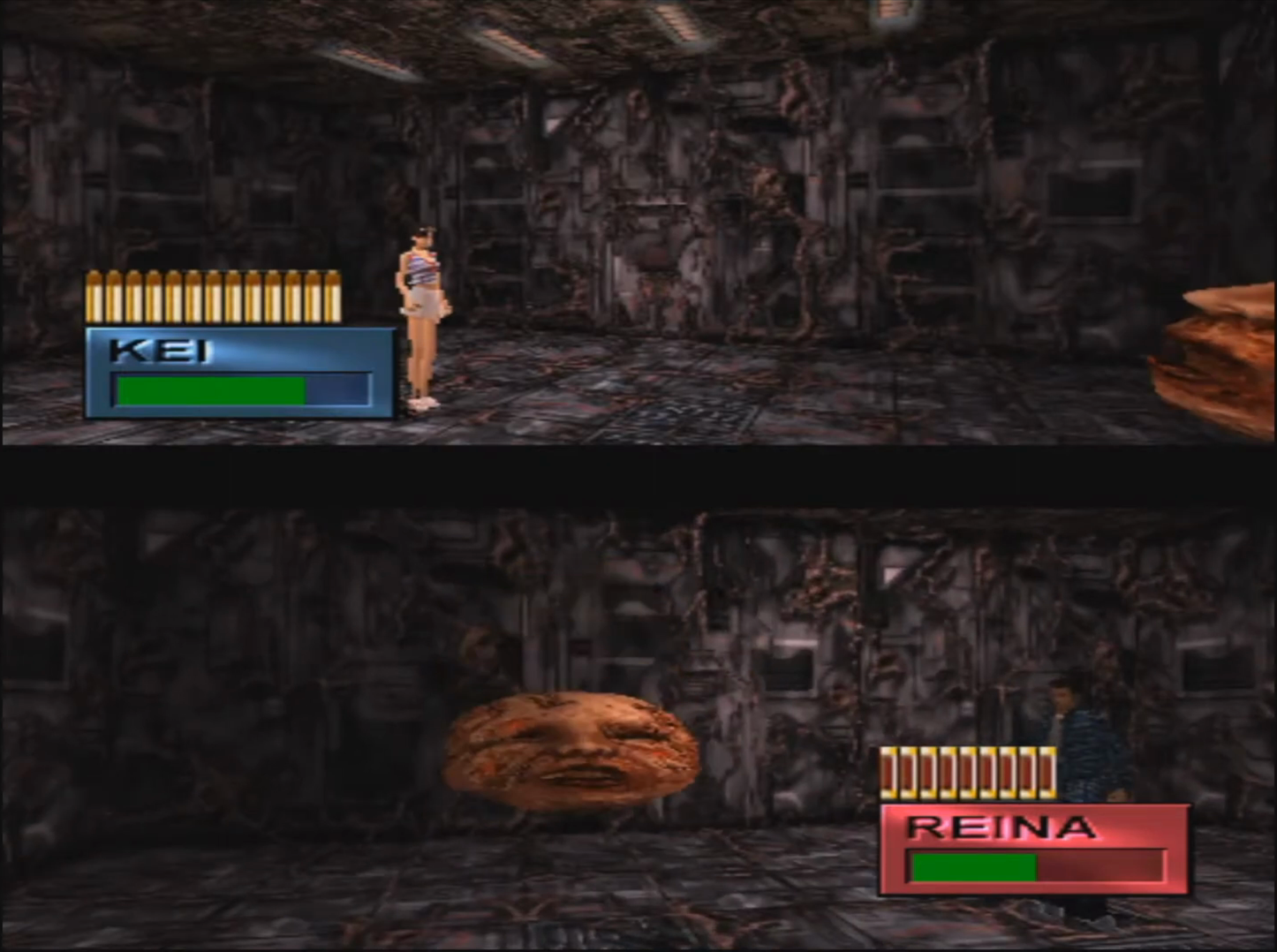
Seven Mansions (Dreamcast)
FINAL THOUGHTS
So there are some co-op games that only came out in Japan, and there are plenty more where that came from. I will probably do more on this topic, but let me know what your favorite co-op Japan-only games are.
For more games to play together, explore the Classic Co-op database and my 20 PS1 co-op games. For more unusual hardware, read The Strangest Co-op Setups in Gaming History.