
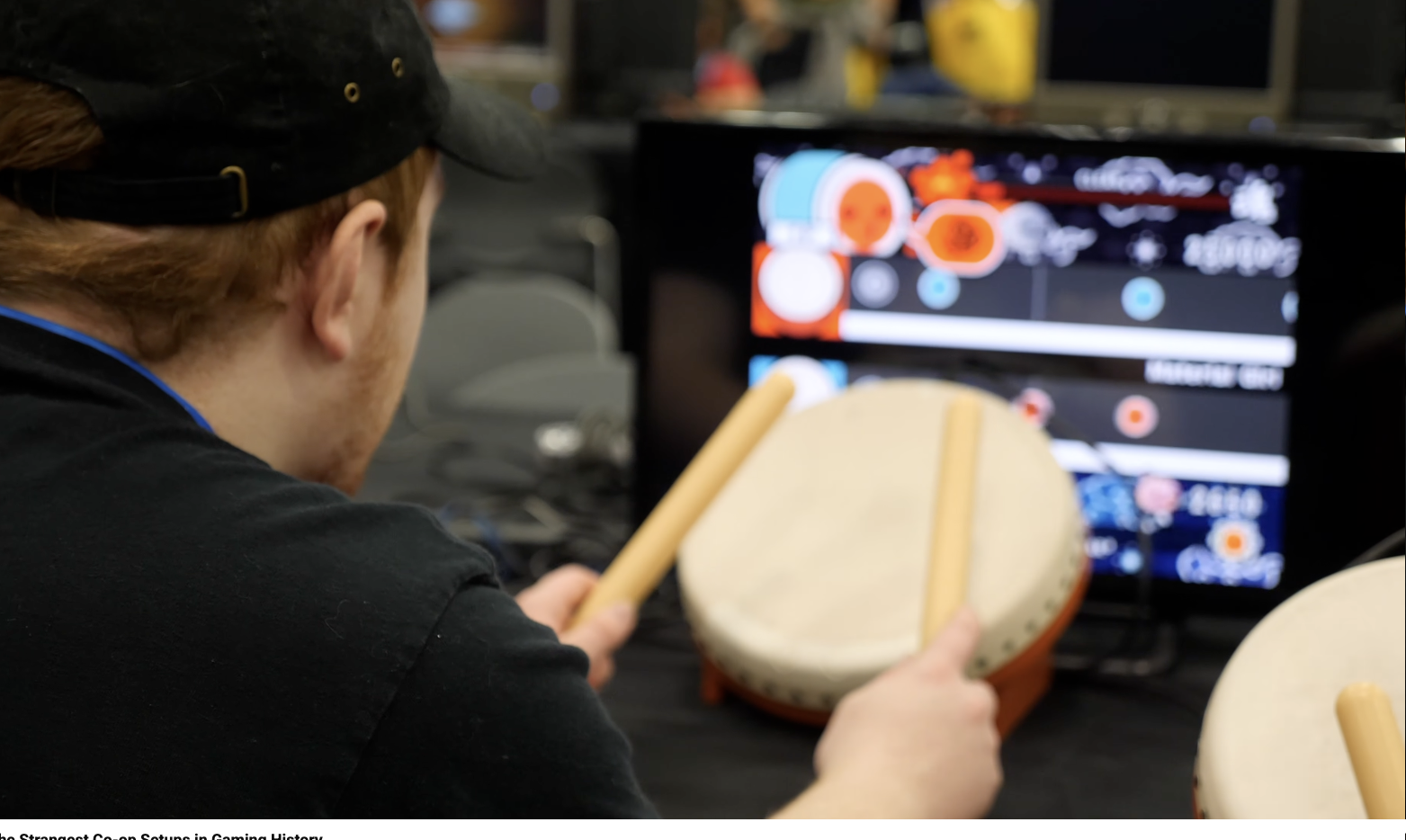
I love weird video game hardware, and I obviously love co-op games. So in this video, I’m mashing together those two great passions and talking about some of the strangest co-op setups in gaming history.
THE TYPING OF THE DEAD (DREAMCAST KEYBOARD)
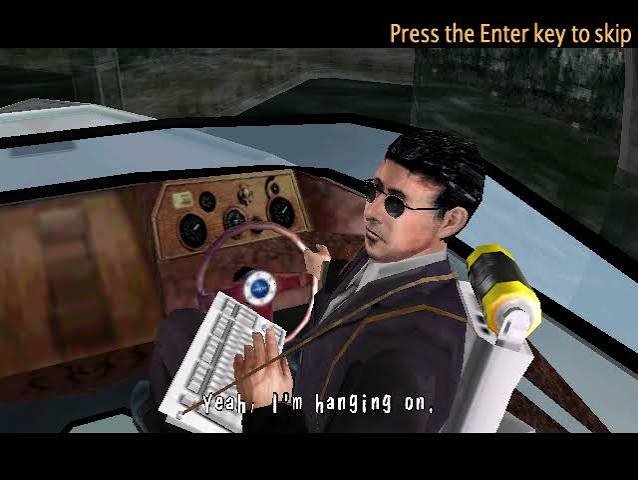
The Typing of the Dead for the Sega Dreamcast is one of the weirdest setups out there, and it requires two Sega Dreamcast keyboards. The game plays like House of the Dead, but instead of shooting zombies, you’re typing out the words that show up on screen, and somehow typing kills them. The best part is that in-game, the characters literally have a Dreamcast strapped to their back with a keyboard right in front of them, which might be one of the funniest things I’ve ever seen in a video game. Every time I play it I feel like I suck at typing, but I still have a ton of fun playing it with a friend. Going out and buying two keyboards just for the Dreamcast, basically just to play this one game, is pretty dumb, and I did exactly that. I don’t regret it.
The Typing of the Dead (Dreamcast)
SAMBA DE AMIGO
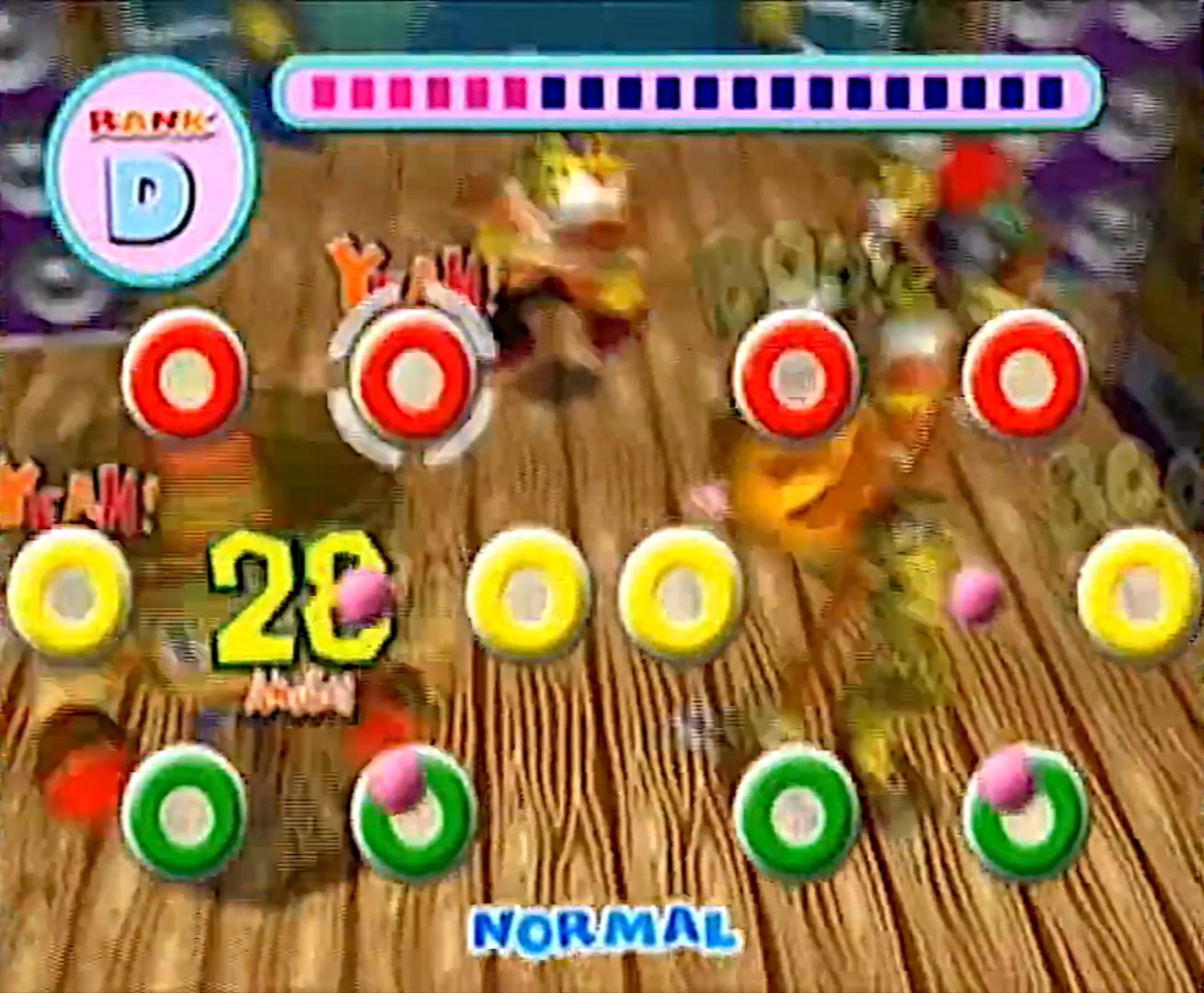
Samba de Amigo is another one on the Sega Dreamcast. It’s a rhythm game played with motion-sensitive maracas, which feels ahead of its time — it’s the kind of thing you’d expect to see on the Wii years later. There’s a co-op mode where each player gets a maraca and shakes it to the rhythm of the song.s.
Guitar Hero / Rock Band
GUITAR HERO / ROCK BAND
Then there’s Guitar Hero and Rock Band. At one point it felt like everybody I knew had the full setup with the drums, the guitar, and the microphone. Even non-gamers would get together to play these. It was a ton of fun getting a group of friends together and playing through classic rock songs, and it introduced a younger audience to some old-school rock and metal. My main memory of Rock Band is my friend Danny actually learning how to play real drums just from playing it. He kept playing until he could clear every song on the hardest difficulty, and then one day he sat down at an actual drum set and just knew how to play. That’s a true story, and he and I used to jam together. I taught myself guitar over the years, though I never got that good, and unfortunately Rock Band guitar skills don’t translate to a real guitar. Still, we had a lot of fun jamming on Rock Band, and in a much worse way, on real instruments. If you want to know where all this hardware ended up once people stopped playing, it’s at every single Goodwill in the country.
Guitar Hero: On Tour (DS Grip)
GUITAR HERO: ON TOUR (DS GRIP)
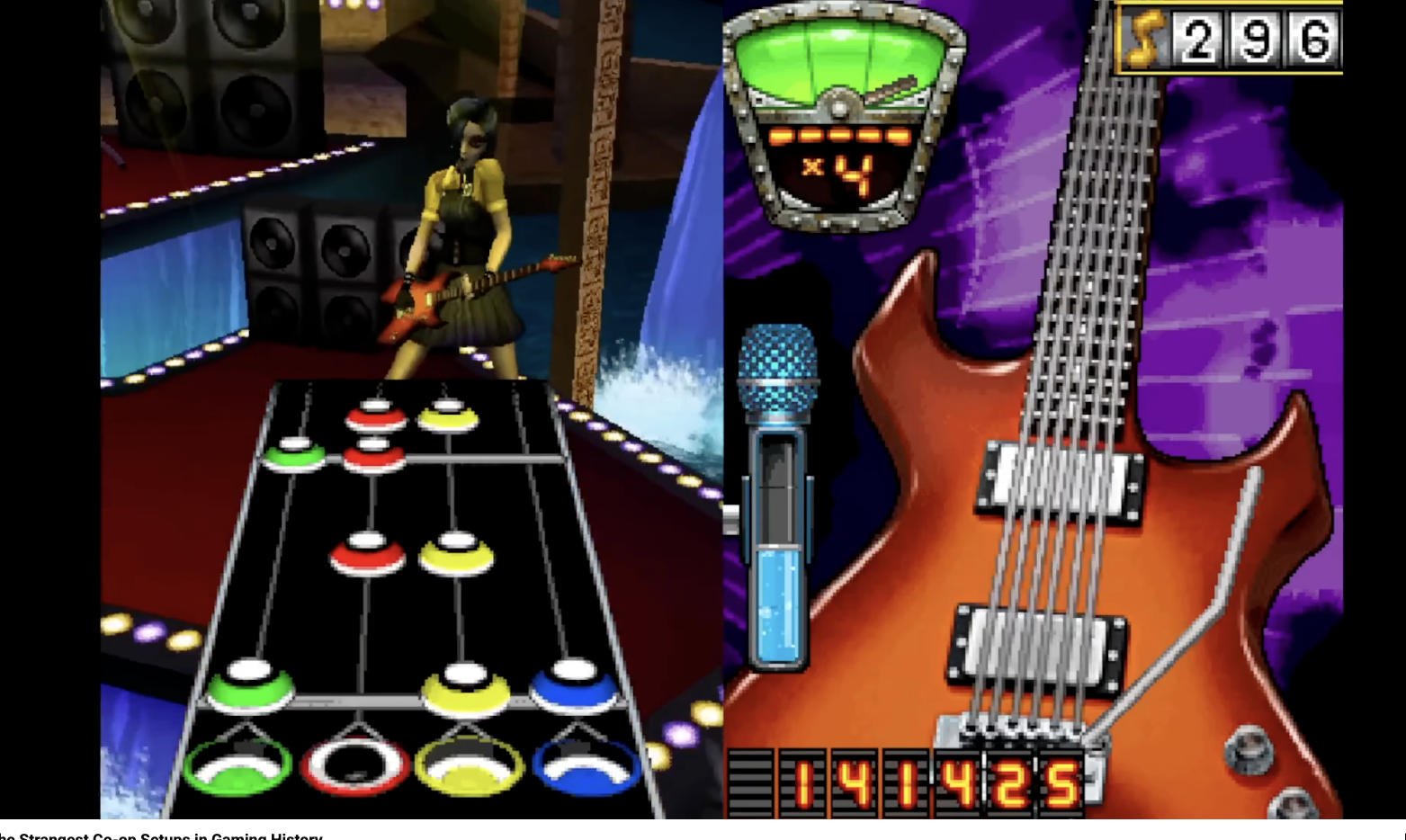
Guitar Hero even got a Nintendo DS version called Guitar Hero: On Tour. There’s a little grip that plugs into the GBA slot on the DS, giving you tiny fret buttons in one hand while you use the stylus as a guitar pick. With two of these and two DS systems, you could actually play co-op. It’s pretty cool that they managed to translate the Guitar Hero concept down to a handheld.
DONKEY KONGA
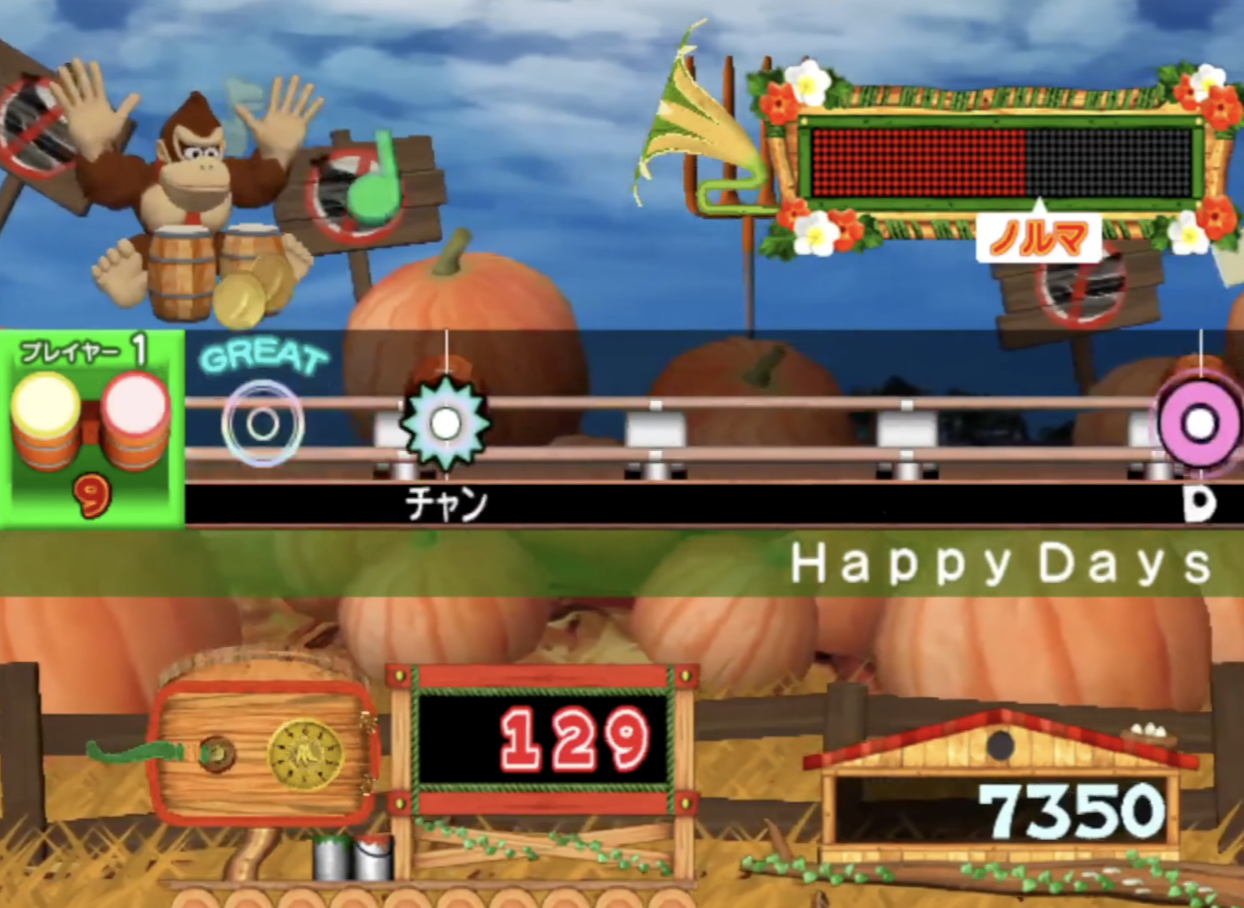
Another piece of old Goodwill-shelf hardware: the Nintendo bongos for the GameCube, made for Donkey Konga. It’s a rhythm game played entirely through the bongos, and with multiple sets you can play it in co-op.
Donkey Konga
TAIKO NO TATSUJIN
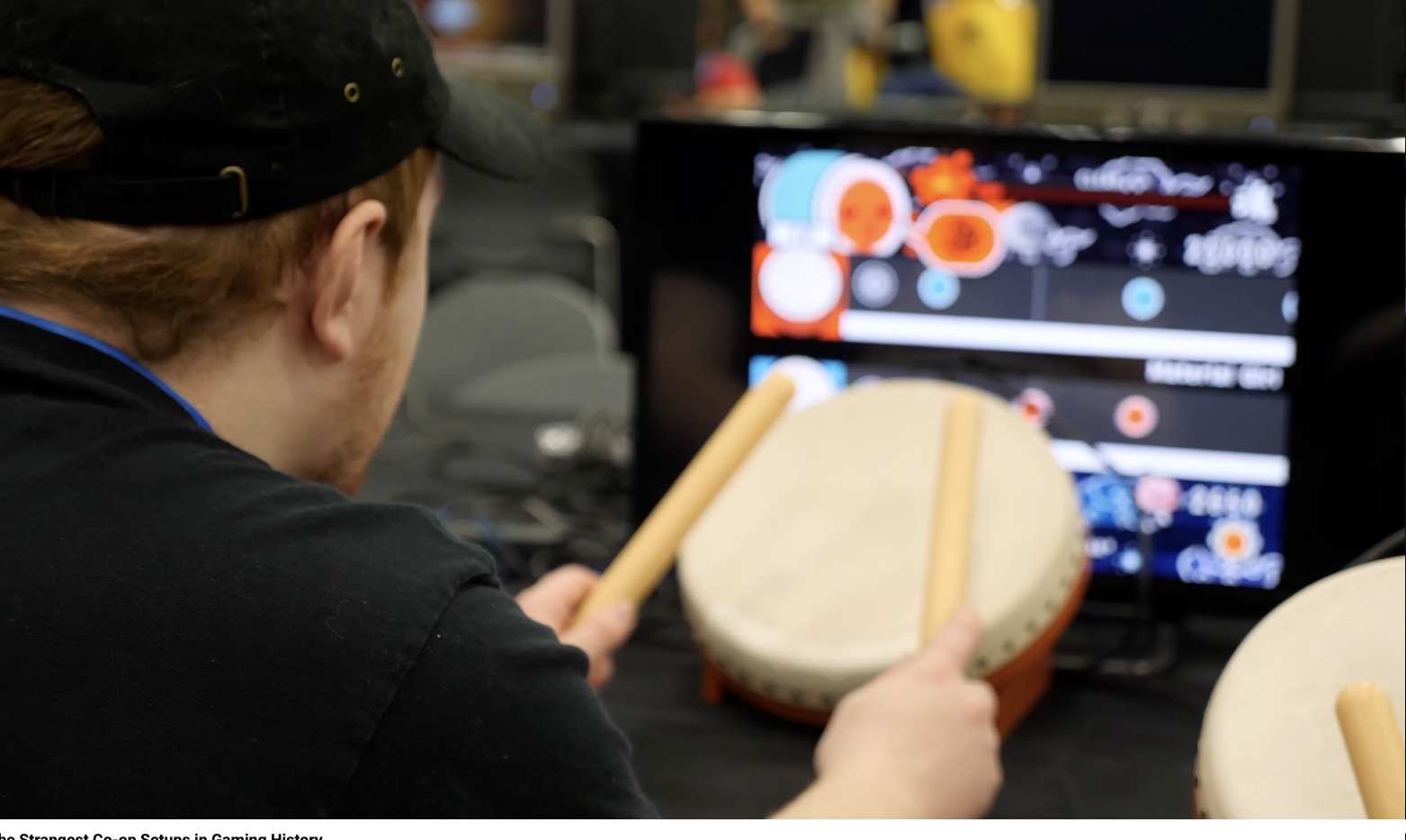
Similarly, Taiko no Tatsujin is another drum game, one that was especially popular in Japanese arcades. Unlike Donkey Konga, you actually use drumsticks here. I’ve run into this one out in the wild in a few different arcades, and it’s a lot of fun.
Taiko no Tatsujin
STARSKY & HUTCH
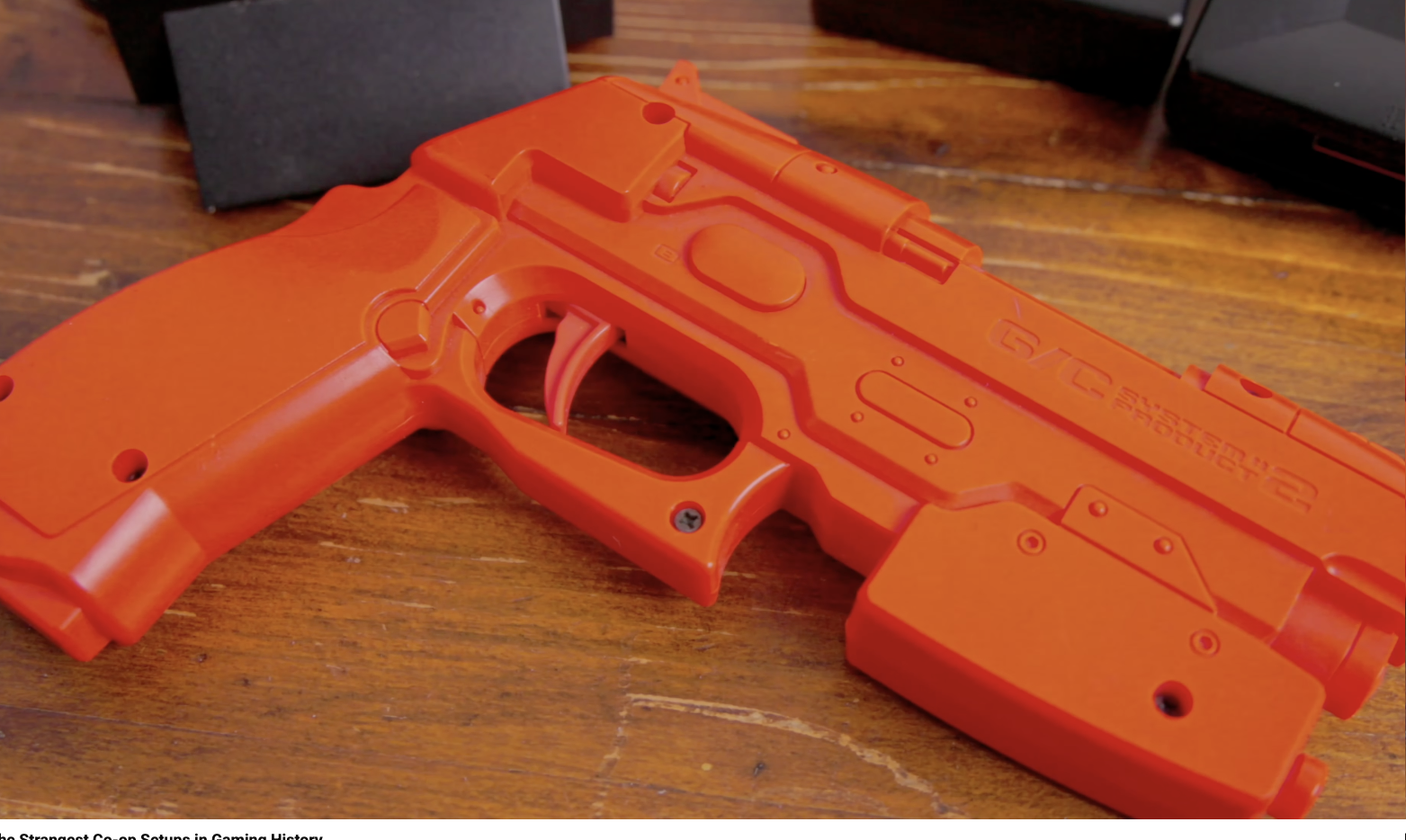
Back on home consoles, Starsky & Hutch mostly plays like a run-of-the-mill licensed title, and for the most part it is. But the standout feature is that you can play it with a steering wheel and a light gun, so one person drives while the other handles all the shooting. It’s gimmicky, but it elevates the experience quite a bit, and honestly that gimmick is the only thing that makes this game worth playing.
Starsky & Hutch
FIRE TRUCK
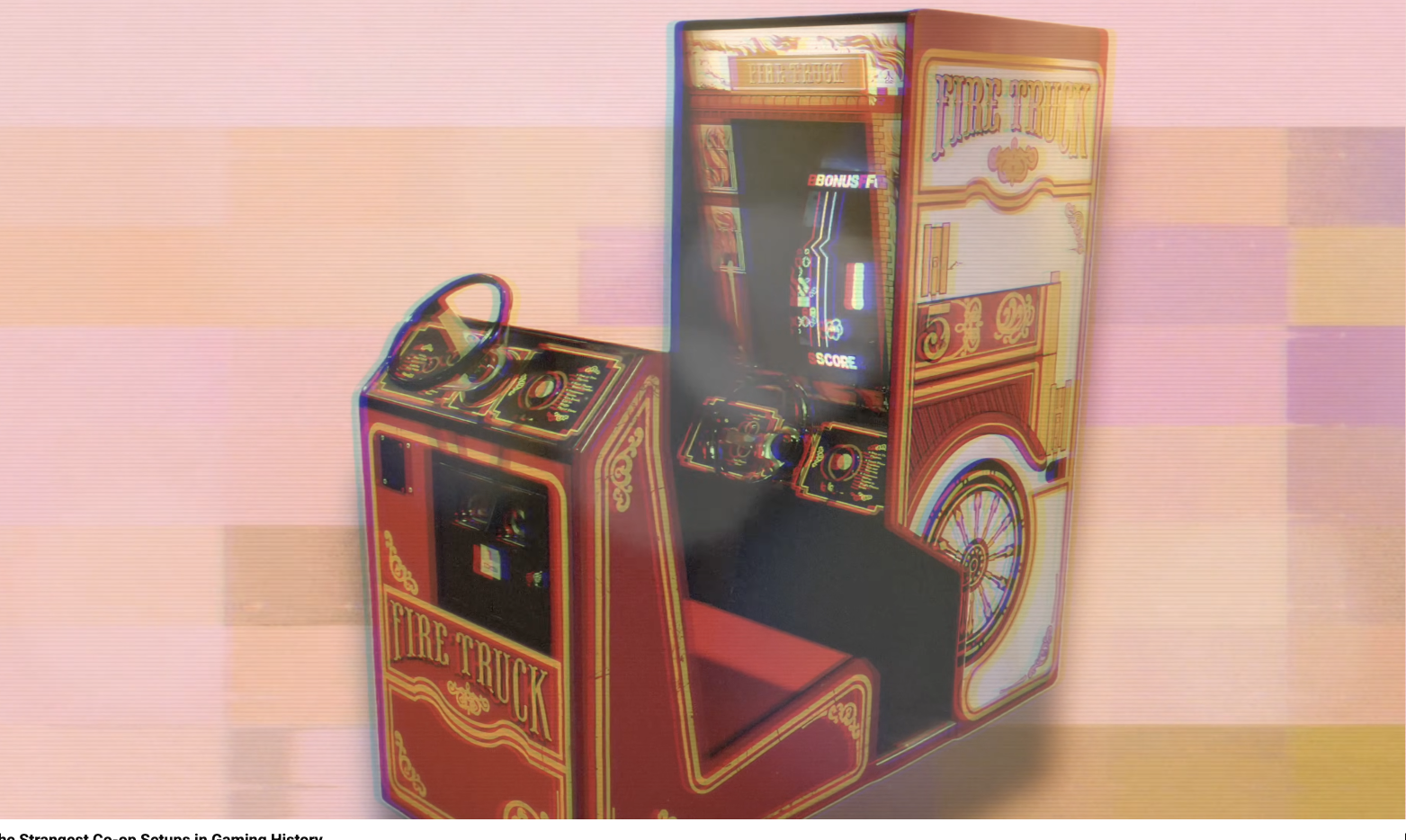
Now for some arcade games with unique hardware. Going back to the very beginning of arcade co-op, there’s Fire Truck by Atari, often considered the first co-op game ever made. I’ve never found one out in the wild, but I’ve played it through emulation and it’s surprisingly ahead of its time. The cabinet has two steering wheels: one player sits and controls the front half of the fire truck, while the other stands behind them and controls the back half. You drive through a maze trying not to crash into the walls and go for a high score. The whole game is black and white and very basic, but it still looks pretty good even without color.
Fire Truck
SEGASONIC THE HEDGEHOG
Another arcade-only game is SegaSonic the Hedgehog. I’ve only been able to play it through emulation, but it’s a fun one — three-player co-op where each player uses a trackball to move their character, with one button to jump. It’s a genuinely unique concept, and there aren’t many other games like it.
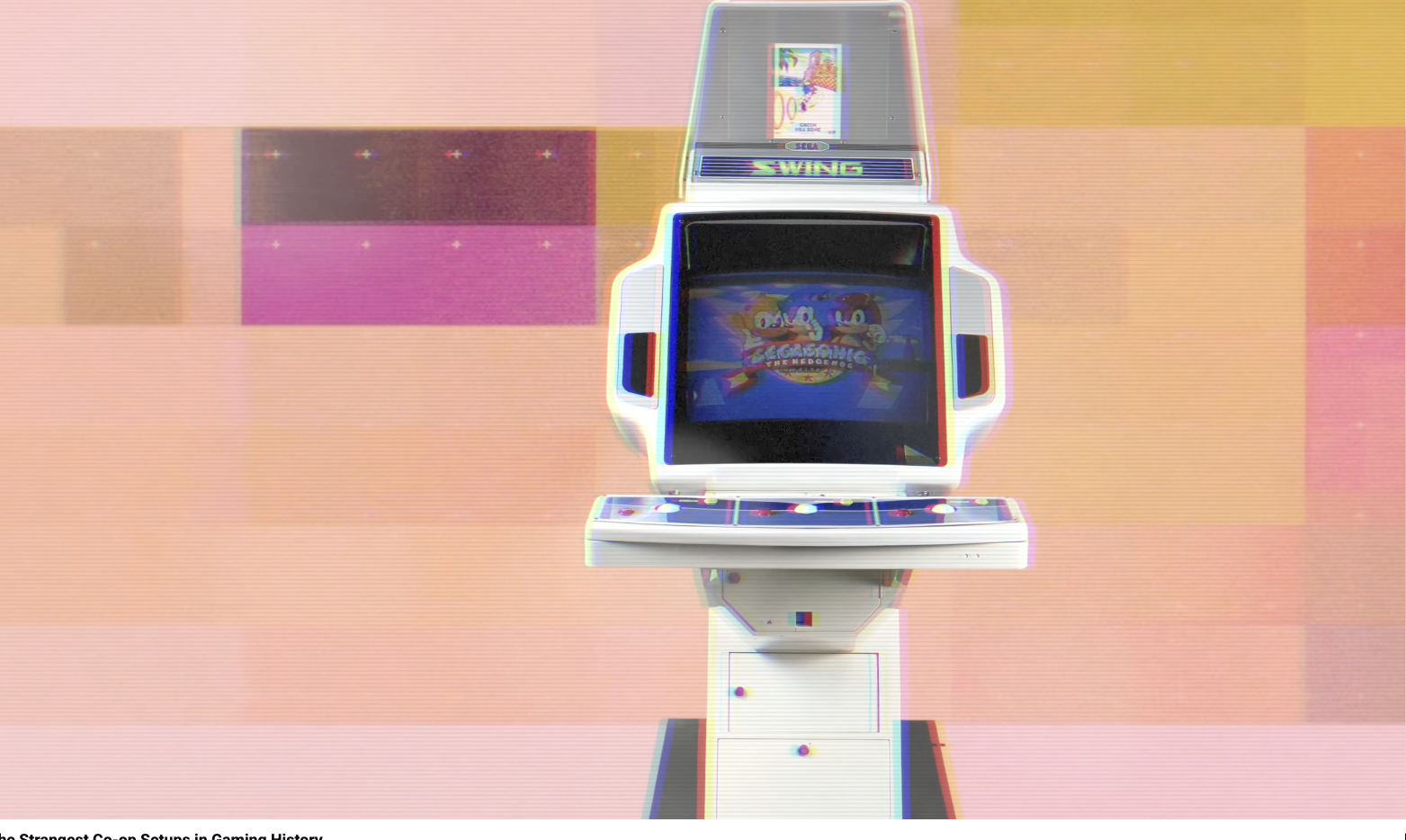
SegaSonic the Hedgehog
CABAL
Also in the arcades, there’s Cabal, a game that basically created its own genre of shooters. It’s like a predecessor to the third-person shooter, except you move your character left and right while independently aiming a cursor to shoot enemies. In this version, a trackball moves your character and the cursor, with two buttons for shooting and throwing grenades. I haven’t played the arcade version myself, but I played the NES version a lot and I love it.
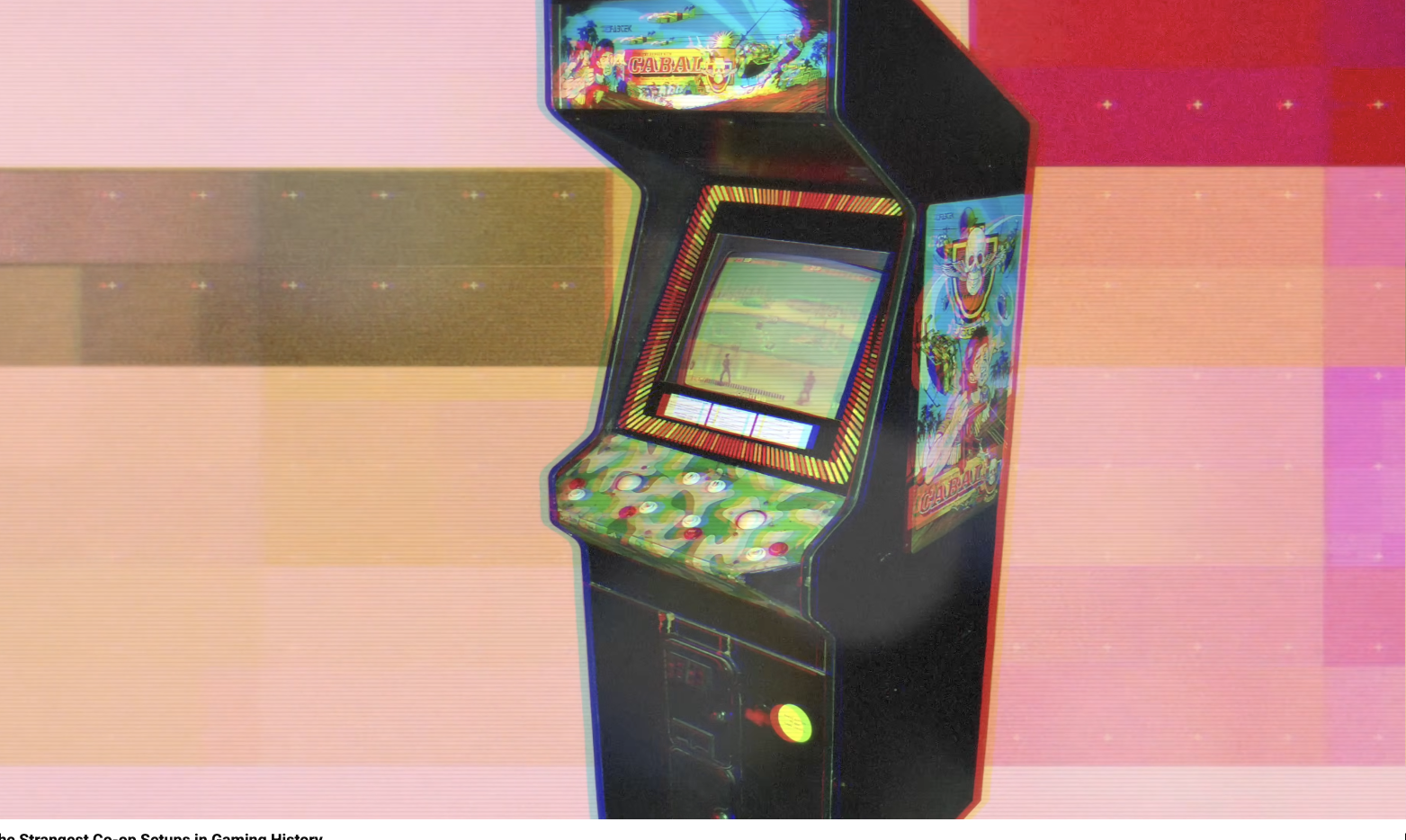
Cabal
LUCKY & WILD
Another unique arcade game, kind of like an earlier version of Starsky & Hutch, is Lucky & Wild. It’s a sit-down cabinet with a steering wheel and two guns: one player drives with one hand and holds a gun in the other, while the second player just handles their own gun. It mixes racing with light-gun shooting, and I played it once at an arcade in Portland and had a great time..
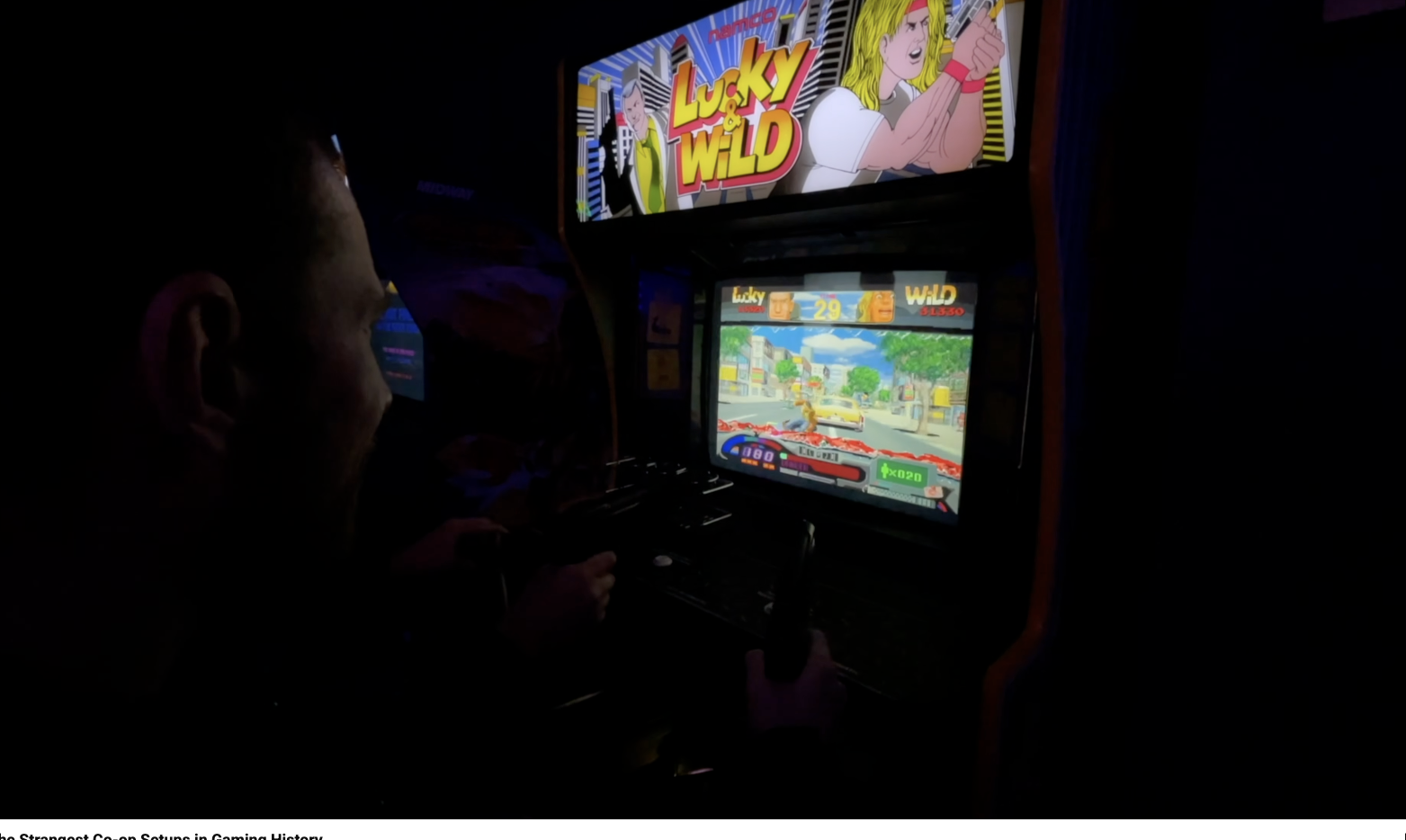
Lucky & Wild
LAMBORGHINI AMERICAN CHALLENGE
Back to consoles that need unique hardware: Lamborghini American Challenge on the Super Nintendo looks like a standard racing game on the surface, but it has a hidden mode. Plug in the Super Scope, pull the trigger at the title screen, and you unlock a secret menu where you can select two-player mode. One player drives with a controller while the second uses the Super Scope to shoot the other racers — you’re the only one on the road with a gun. It’s a game I never would have paid attention to otherwise, but that mode makes it genuinely fun.
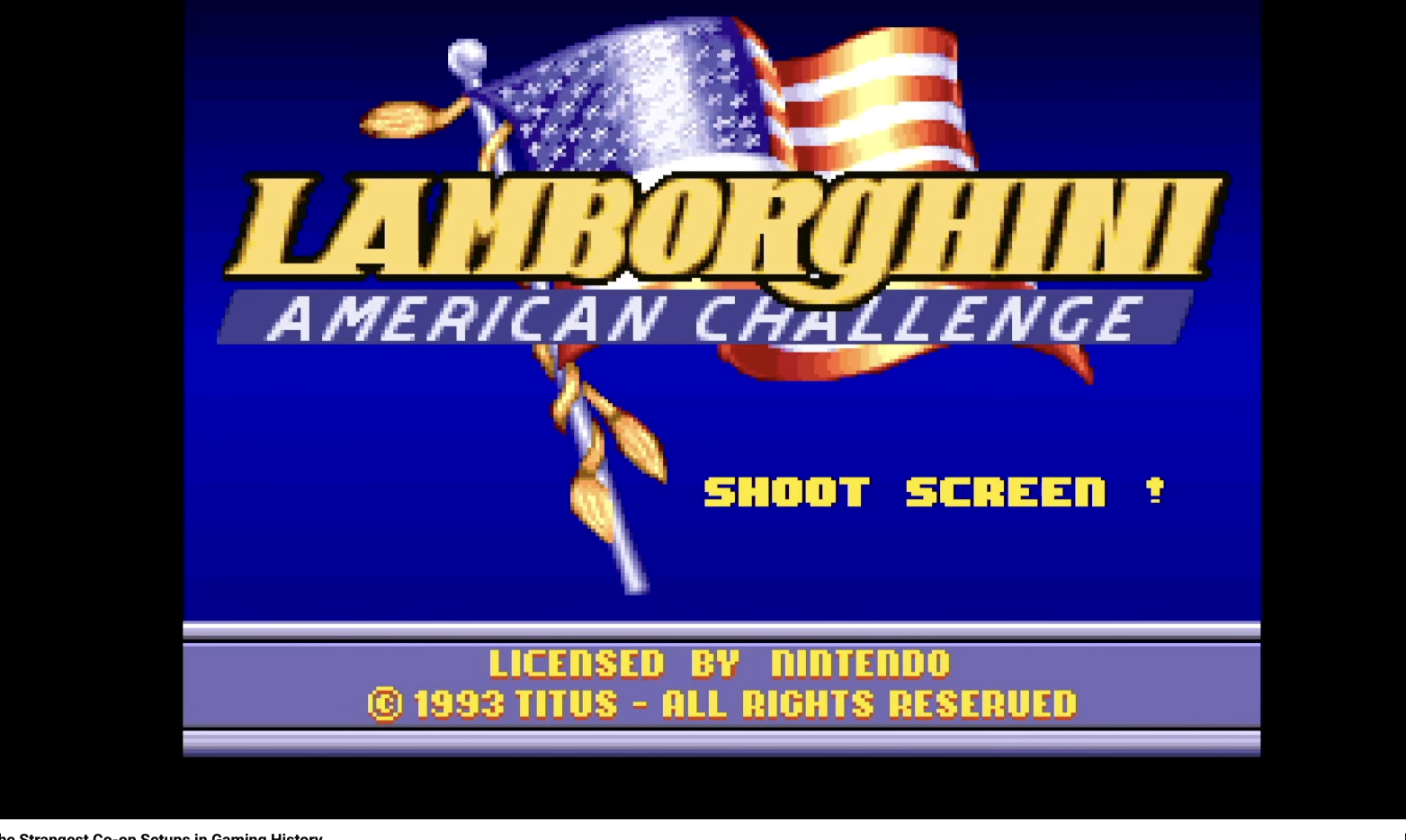
Lamborghini American Challenge
BODY COUNT
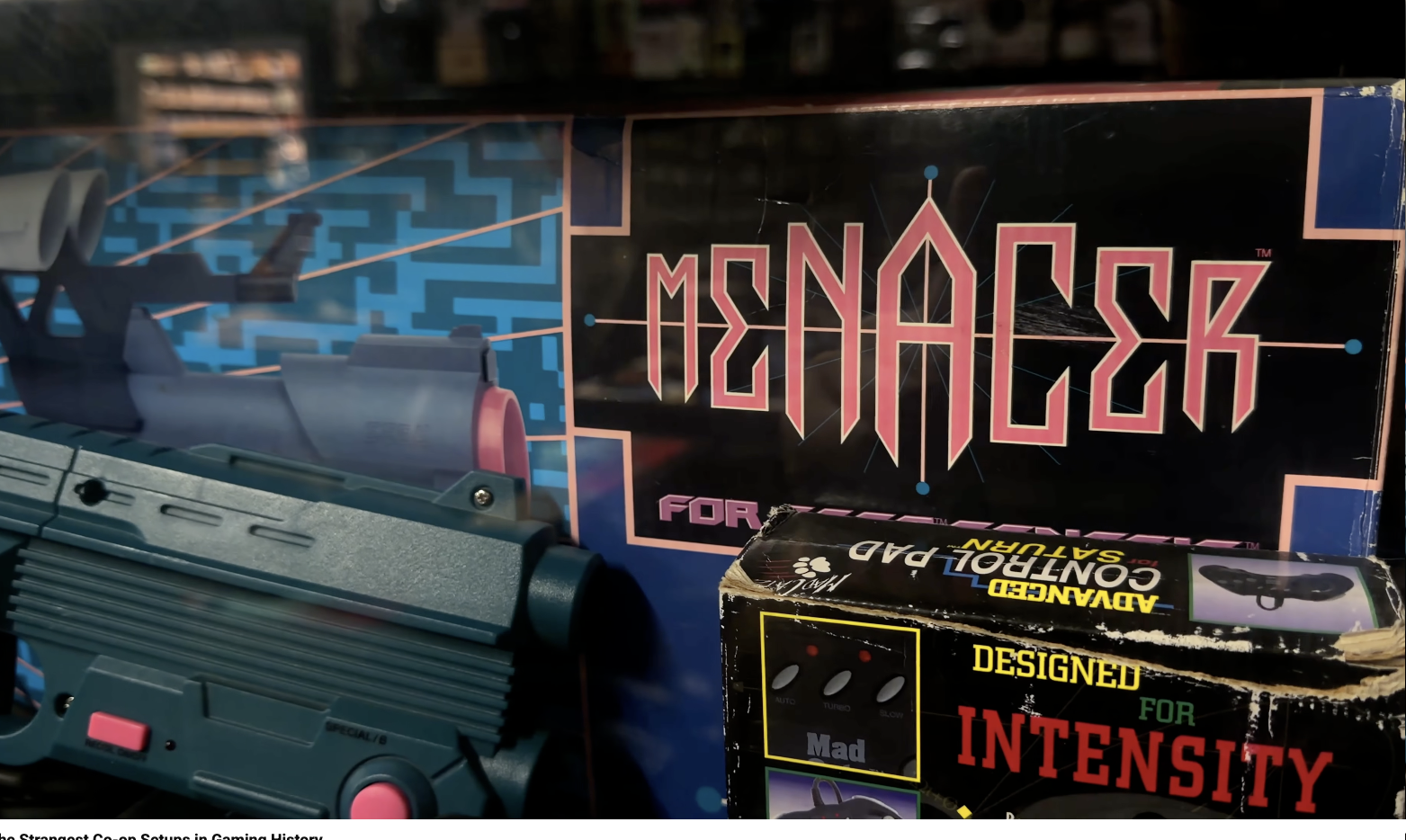
Body Count came out on the Mega Drive in Europe, but in the US it was only available through the Sega Channel with no physical release, so a lot of people never got the chance to try it. It’s a light-gun shooter, but for some reason you can’t use two light guns together. Instead, co-op means pairing one Sega Menacer light gun with a gamepad for the second player’s cursor, or — the better way to play it — pairing the light gun with the Sega Mega Mouse, a rare peripheral now. Combining a mouse and a light gun for two-player co-op on a home console isn’t a combination I can think of existing anywhere else.
Body Count
TEMPEST 2000
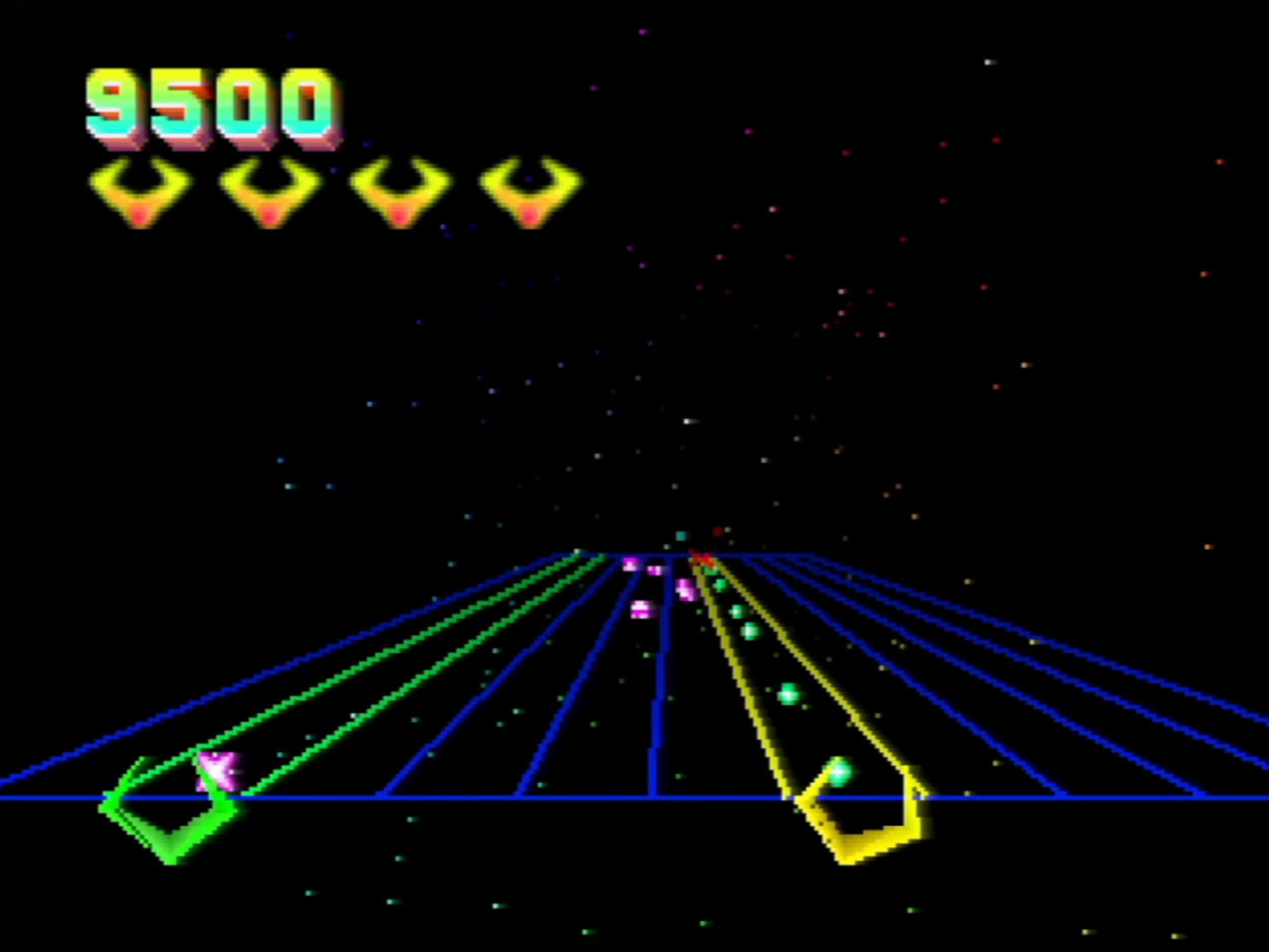
Tempest 2000 on the Atari Jaguar is technically meant to be played with the Jaguar’s D-pad, and honestly, that controller isn’t great — the D-pad is pretty rough. That’s still the main way I’ve played this game, and it isn’t terrible, and it’s probably the best co-op game on the Atari Jaguar. But there’s another way to play it: the retro gaming community actually made a modified version of the Jaguar controller with a rotary knob. I’ve seen it installed two different ways, one where it’s on the front and replaces the D-pad, and another where it’s installed on the back so the controller still works normally otherwise. And I guess this works because there’s hidden code for rotary support that was still left inside Tempest 2000 — we just never had the controller to use it. I don’t own one of these myself, but they had it set up at the Portland Retro Gaming Expo a few years ago, so I was able to try it, and it works great. It elevates an already excellent game even more, and I’d imagine having two of these and playing this one co-op would be a really fun experience.
G.I. JOE: COBRA STRIKE
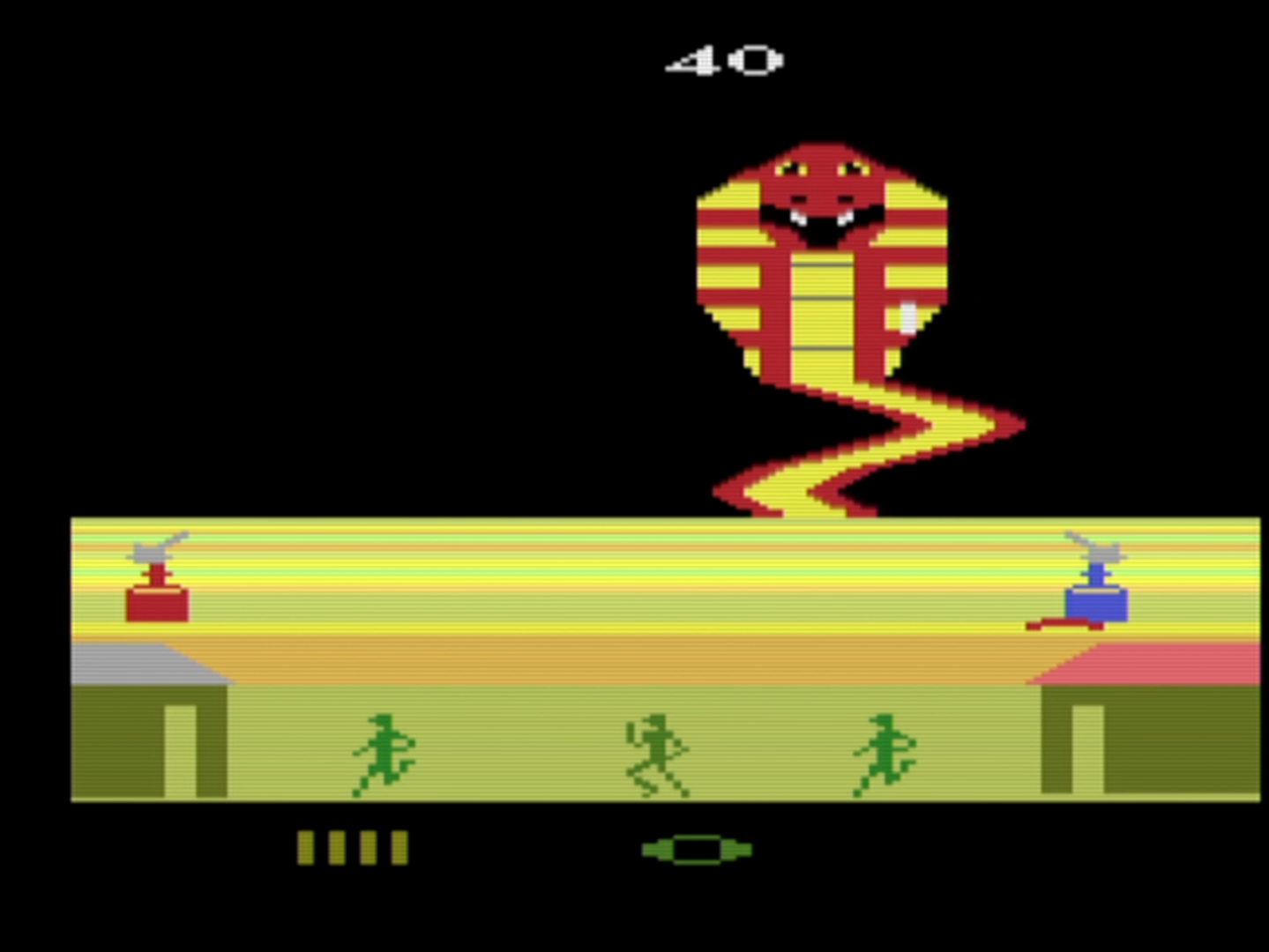
Back in the day, before controllers were really standardized, home consoles were experimenting with all sorts of ideas — the Intellivision had that little dial instead of a D-pad, the ColecoVision had a weird joystick, and the Atari 2600 had its standard joystick with one button, but it also had paddle controllers. It didn’t feel weird back then, but now it definitely feels like a novel thing. A ton of games supported the paddles, but the only co-op game I’m aware of that uses them is G.I. Joe: Cobra Strike, and this might be my favorite co-op game on the 2600. It supports two paddle controllers, and it kind of plays like Breakout — missiles get dropped onto little stick-figure humans walking across the screen, and each player uses their paddle to move left and right to block the missiles, then moves their platform over to their own cannon to fire at the Cobra in the middle of the screen. Do that enough times and you kill the Cobra and move to the next level. Unlike most Atari 2600 games, this one is truly cooperative — you actually share a score. Playing it with two paddle controllers really makes this stand out from other games of the era, and I think that’s what helps it hold up.
SMASH TV
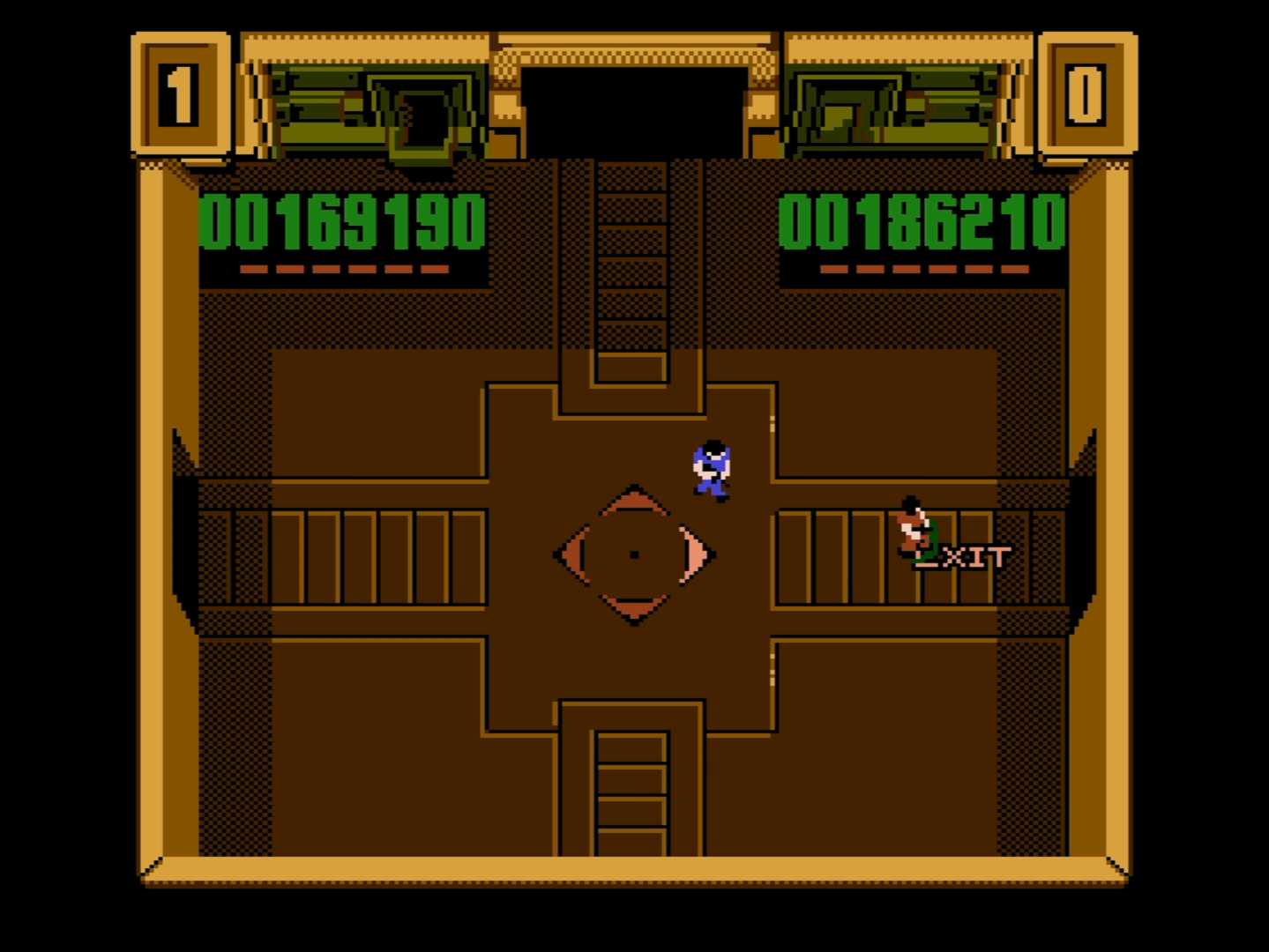
In the arcades, if you wanted to play a twin-stick shooter, you just had two arcade sticks right there for you — one for movement, one for shooting. That didn’t translate the same way to home consoles, but sometimes people found interesting workarounds. For Smash TV on the NES, if you get a four-player adapter, you can plug in four controllers, and then each player holds two controllers vertically, using the D-pad in one hand to move and the D-pad in the other hand to do all the shooting. Now it feels like a full-fledged twin-stick shooter on your home console, and it’s just another cool example of finding unique hardware to elevate a co-op experience.
ROBOT WAR 2684
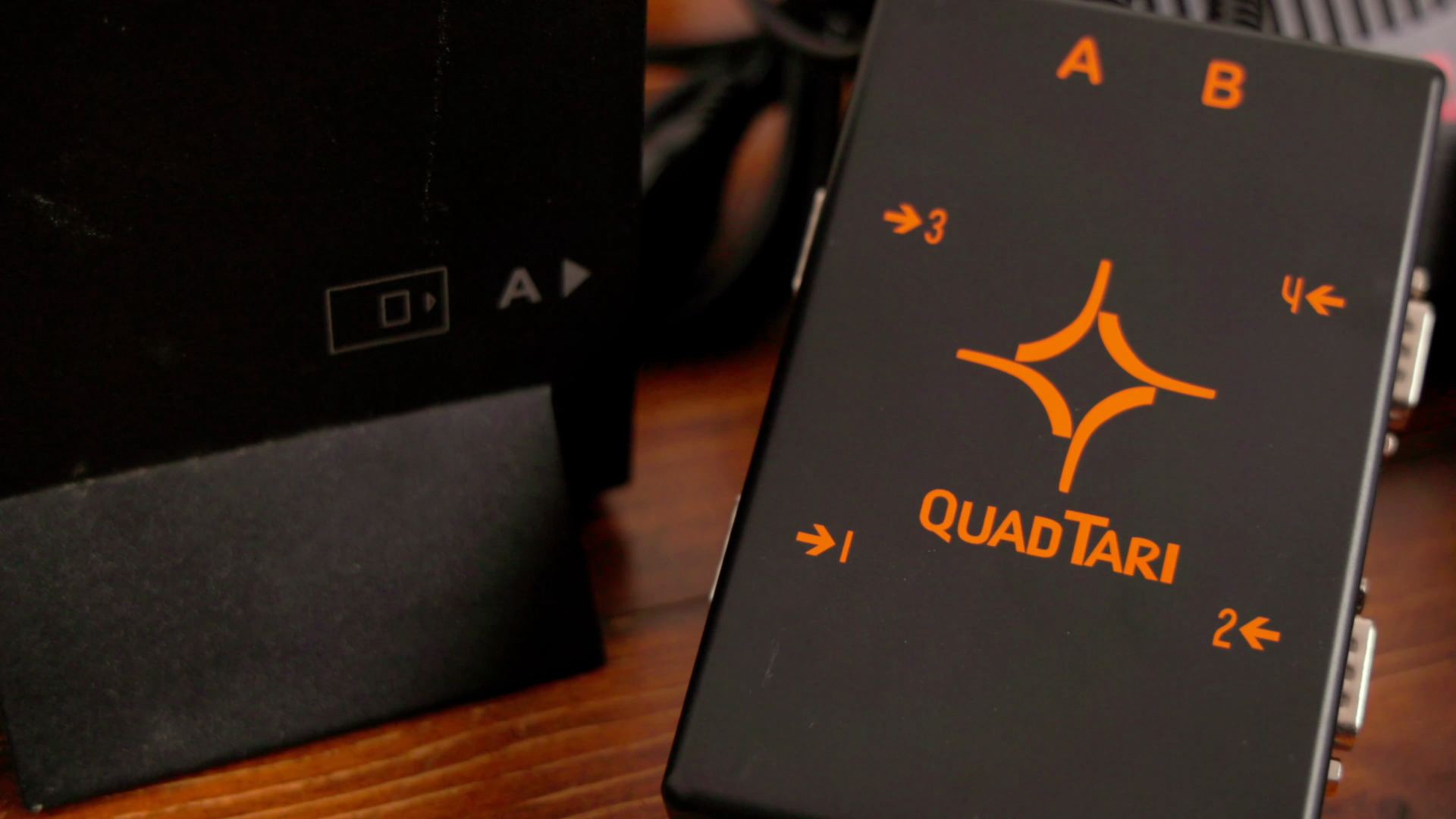
The Atari 2600 actually does something very similar to Smash TV, but this one wasn’t available back in the day — it’s a homebrew. The retro community once again made some really cool hardware: a four-player adapter for the Atari 2600 called the QuadTari. There are a handful of games that support it, but the coolest example is a homebrew called Robot War 2684, made by Champ Games. If you have the QuadTari, you can plug in four joysticks, and just like Smash TV, each player gets two joysticks so you can play a co-op twin-stick shooter. Playing it this way makes this one of the best co-op Atari 2600 games ever made. If you can get all the hardware together, I highly recommend it.
HYRULE WARRIORS
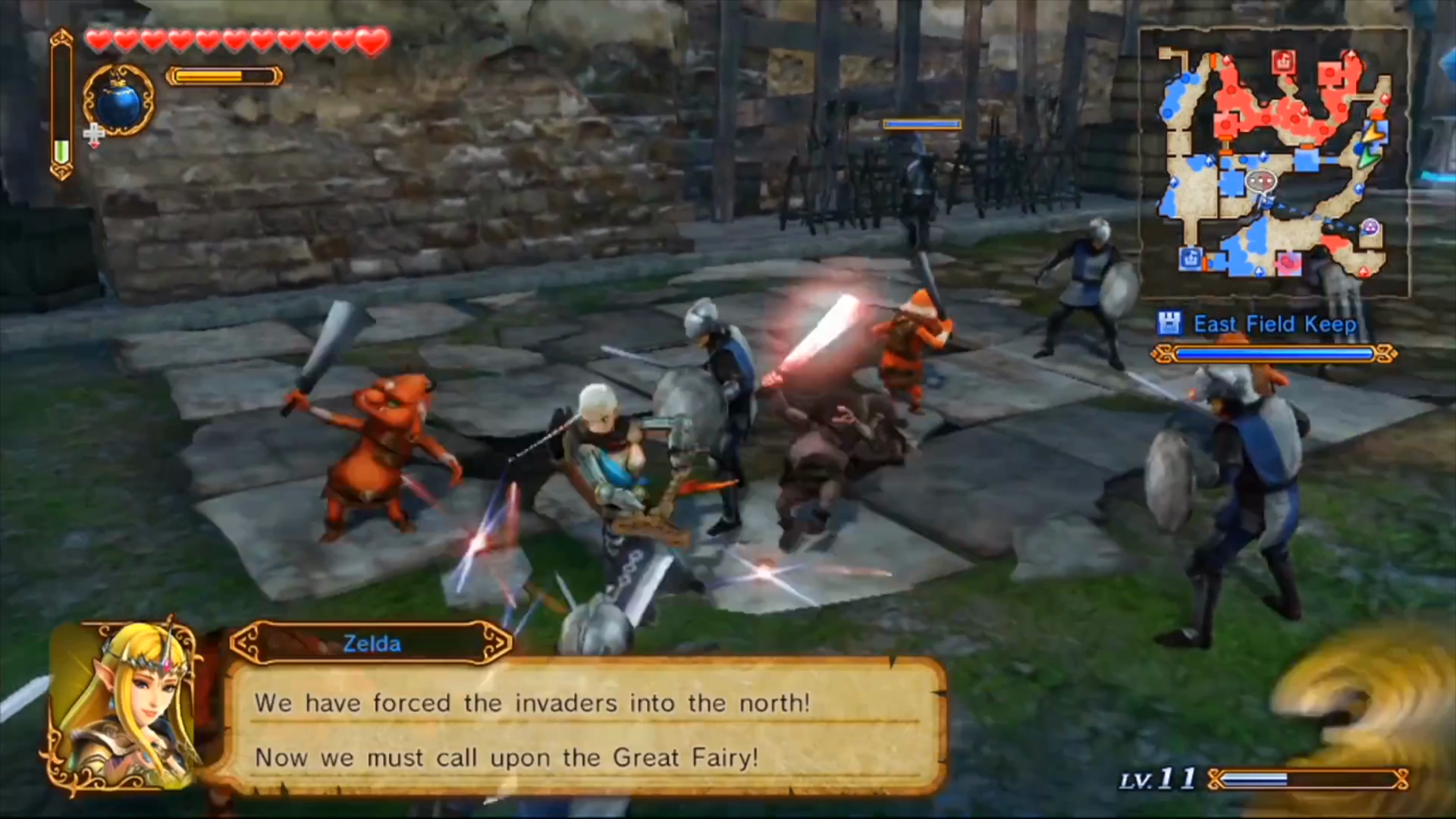
Some other really unique hardware is the Wii U. I actually feel like this system was totally underrated, and the GamePad was such a unique concept that I just feel like it was underutilized. There were a handful of games, though, that really took advantage of its unique features and implemented them in cool ways for co-op games. One of the most straightforward ways is Hyrule Warriors — it’s pretty simple, one player plays on the TV screen and one player plays on the GamePad. I like this kind of support because you no longer need split-screen, you each get your own screen. That was just a very simple option that should have been used a lot more.
AFFORDABLE SPACE ADVENTURES
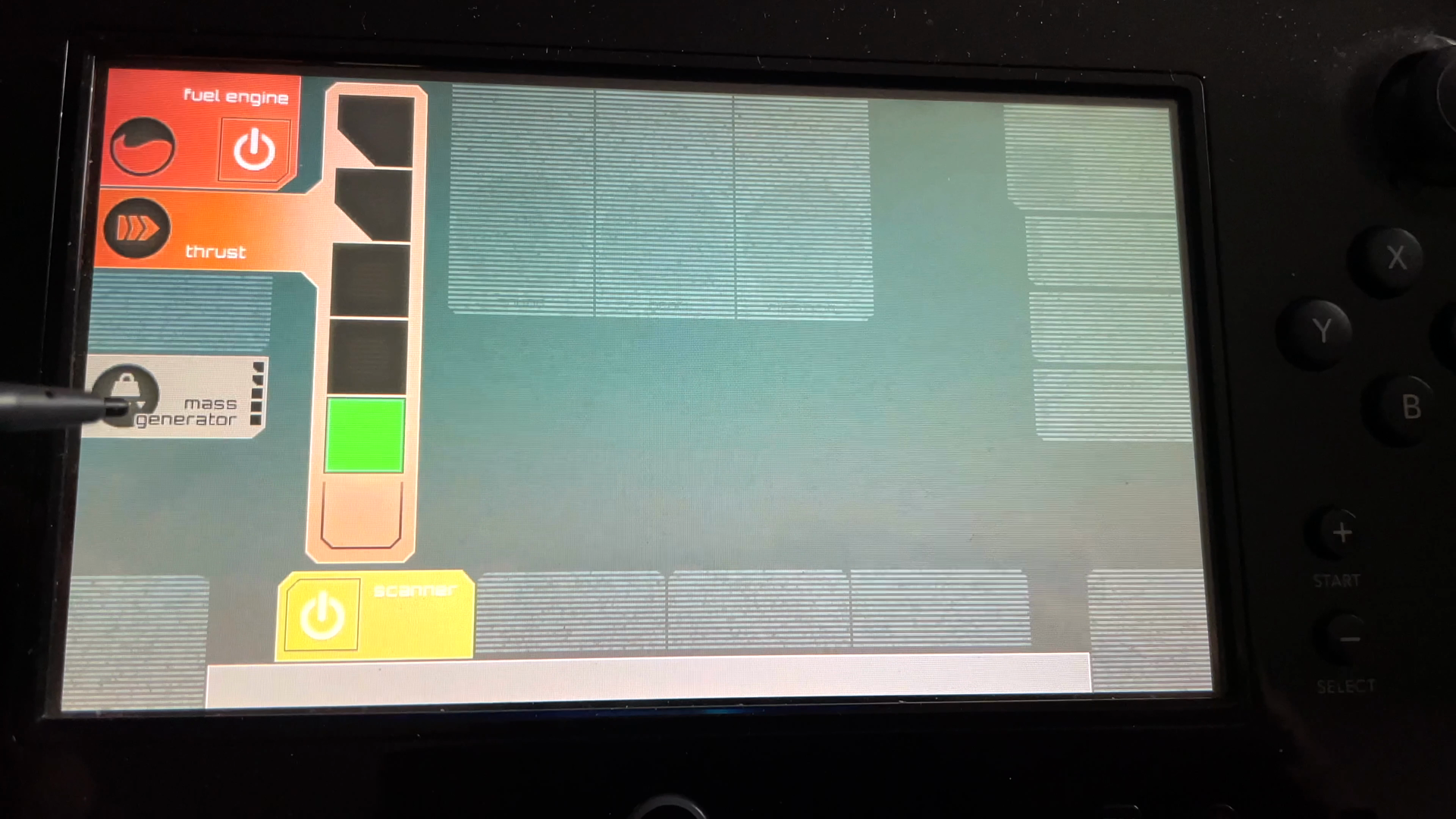
One of the most unique implementations of the Wii U GamePad in a co-op game was found in Affordable Space Adventures. This is an asymmetrical co-op experience where you have to fly a ship around, but all the tasks are split up between different players, and each player is responsible for a different function of the ship. There’s the engineer, who actually uses the GamePad — this player controls the ship’s internal systems using the GamePad’s touchscreen, monitoring the heat and electric levels and managing the power output. Then there’s the pilot, who just uses a Pro Controller or a Classic Controller and is responsible for steering the ship around and navigating through the levels. And then there’s the science officer, who uses a Wii Remote and Nunchuk, and whose main job is using the Wii Remote pointer to aim the ship’s scanner, flashlight, and flares. Every character has a different role, and every player is using completely different hardware and controllers to do it. This game is still exclusive to the Wii U, and I think it’s one of the best games on the system, and the best use of the GamePad. I just wish more games actually tried to do things like this.
HONORABLE MENTIONS
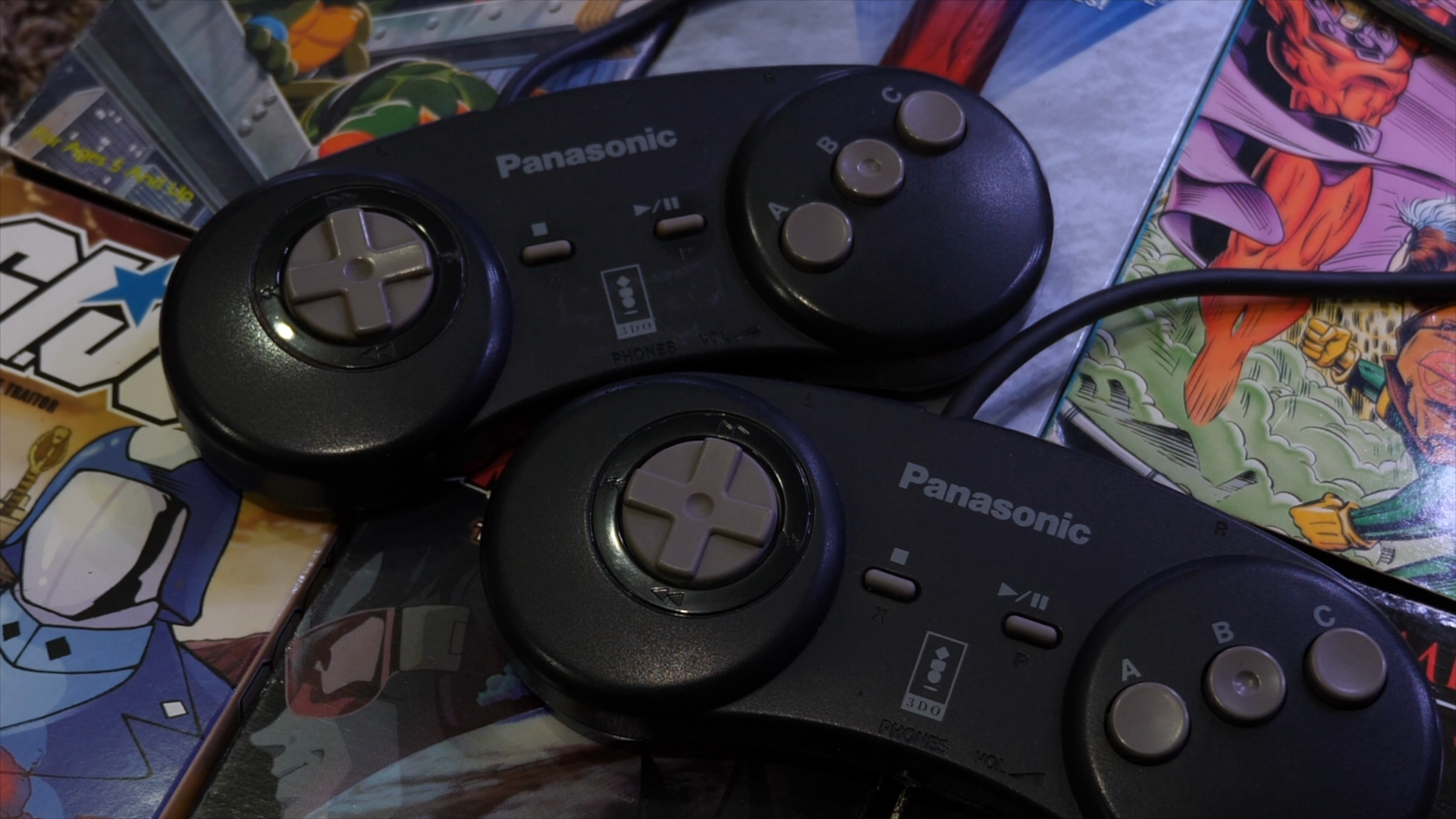
A few honorable mentions here — these aren’t really co-op games so much as just some unique hardware. The 3DO itself had a handful of decent co-op games, but to play them, you actually had to plug controllers into each other, since there’s only one controller port on the console. Player one plugs into the console, and every other controller plugs into the controller next to it. Theoretically you could have unlimited players daisy-chained together, but there weren’t many games that actually supported more than two players anyway. Similar to that, the TurboGrafx-16 and PC Engine only had one controller port, so to play any multiplayer games you needed the Turbo Tap, which plugs into the console and gives you five controller ports. This console actually did support five-player games — Dungeon Explorer and Dungeon Explorer 2 are both five-player co-op games. The Atari 5200 was the first home console with four built-in controller ports, and that came out all the way back in 1982, way before the N64, way before the Dreamcast, way before any other console did it. But ironically, Real Sports Tennis was the only official retail game that let four players compete simultaneously. Super Breakout did have four-player support, but it was alternating, so there wasn’t really a reason to have four ports for that. And then there’s the Sega Saturn, a console that could technically support up to twelve players if you had two six-player multitaps — which sounds incredible, except there’s literally no commercial game that used all twelve. Even Saturn Bomberman only supported ten players.
FINAL THOUGHTS
Now that controllers have been mostly standardized and arcades barely even exist, weird multiplayer hardware has pretty much just disappeared. But for a couple of decades, developers were constantly experimenting with really weird ways to get people playing together. Sometimes you were spinning a trackball or a rotary knob. Or maybe your passenger was shooting at oncoming traffic while you drove. Or maybe you were typing, and it killed zombies for no apparent reason whatsoever. Some of the most memorable co-op experiences are when the dumbest and most gimmicky hardware gets involved, and I honestly just wish developers these days would take some notes and try getting weird again.